AHCC doesn’t erase HPV or stop prostate cancer, but the research picture is more nuanced than that dismissal suggests. Understanding AHCC for men: what the research shows means separating the genuine signals from the overstated claims, so you can make a decision grounded in actual evidence rather than supplement marketing.
Key Takeaways
- AHCC is a mushroom-derived extract studied for immune support, HPV clearance, and prostate cancer, but male-specific clinical data remain limited as of 2026.
- A six-month prostate cancer study found AHCC did not produce robust PSA reductions in most men, though some subgroups showed prolonged PSA doubling times in non-randomized data.
- The strongest human evidence for AHCC and HPV clearance comes from trials in women; male-specific efficacy data are still lacking.
- AHCC appears generally safe at doses up to 9 g/day in short-term trials, with only mild, transient side effects reported.
- No authoritative oncology body recommends AHCC as a replacement for standard treatment in any male cancer.
What Is AHCC and Why Are Men Asking About It?
AHCC (Active Hexose Correlated Compound) is a standardized extract derived from the mycelia of shiitake and other Lentinula edodes mushrooms. Its primary active components are alpha-glucans, short-chain polysaccharides thought to interact with immune receptors. The overview of what AHCC is and how it works covers the biochemistry in more detail, but the short version is this: AHCC is not a drug, not a vaccine, and not a cure for anything currently recognized by major oncology guidelines.
Men are searching for it for two main reasons: HPV-related concerns, including genital warts, penile lesions, and HPV-positive head-and-neck cancers, and prostate cancer, where some integrative oncology programs have begun discussing it as a supportive supplement. The evidence for each of these is at very different stages.
AHCC for Men: What the Research Shows on HPV
HPV affects men just as commonly as women, but HPV in men is under-screened and under-discussed. There is no FDA-approved HPV test for men, which creates a real research gap: most AHCC-and-HPV trials have enrolled women, where cervical testing makes it straightforward to confirm viral clearance.
The most cited human evidence comes from a double-blind, placebo-controlled trial, primarily in women, that found 6 months of AHCC at roughly 3 g/day was associated with clearance of high-risk HPV in a meaningful proportion of participants, with a safety profile comparable to placebo. The researchers themselves noted that, given the biological plausibility and the safety data, AHCC could be considered for male partners or men with low-risk HPV types such as HPV 6 and 11 (which cause genital warts). That is a reasonable scientific inference. It is not the same as a clinical trial demonstrating clearance in men.
A 2025 study on genital warts, a condition affecting both men and women, concluded that AHCC is not expected to prevent recurrence after cauterization in every patient, but may serve as a supportive supplement when other systemic options are absent. That framing, “supportive, not curative”, runs through virtually every honest summary of the AHCC and HPV evidence base.
One active phase II clinical trial is testing AHCC alongside standard chemoradiation in HPV-positive head-and-neck squamous cell carcinoma, a cancer that disproportionately affects men. No efficacy results are available yet. Until they are, any claim that AHCC improves outcomes in HPV-related head-and-neck disease is speculative.
What This Means Practically
If you have HPV and are considering AHCC, the honest answer is: the safety data are reassuring, the biological rationale is plausible, and the direct male efficacy data do not yet exist. That is not a reason to dismiss it, and it is not a reason to rely on it instead of monitoring or treatment.
AHCC and Prostate Cancer: Reading the Evidence Carefully
The prostate cancer research is the most developed male-specific data available for AHCC, and it is still preliminary.
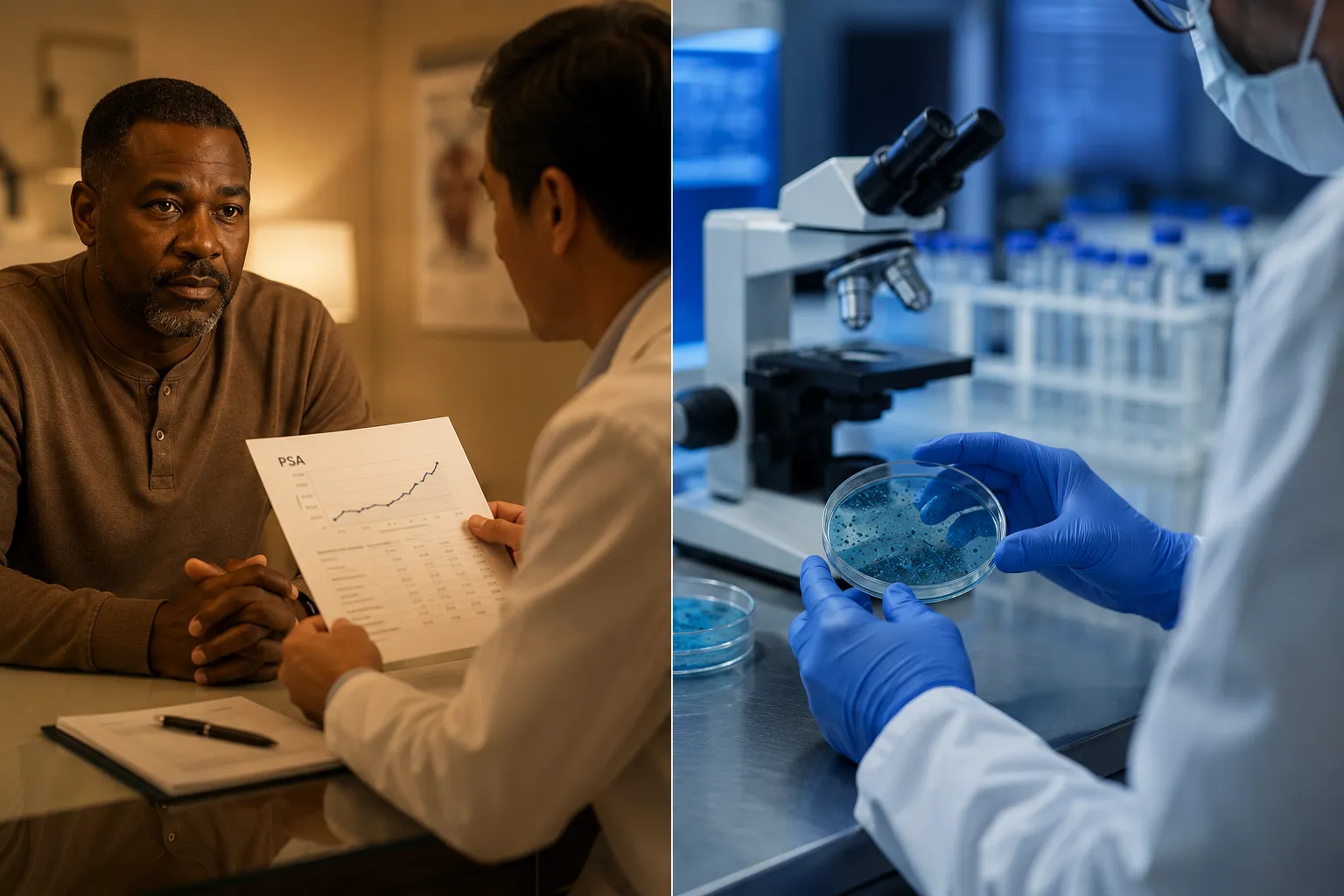
A multicenter open-label study gave AHCC at 4.5 g/day for six months to 74 men with early-stage prostate cancer. Only one patient achieved the benchmark of a 50% or greater decline in PSA. That is not a strong anticancer signal by standard oncology criteria. However, men who entered the study with higher baseline anxiety showed significant reductions in both state and trait anxiety over the six months. Integrative oncology programs have used this finding to position AHCC as a potential quality-of-life adjunct rather than a primary anticancer therapy, which is a fair reading of that data.
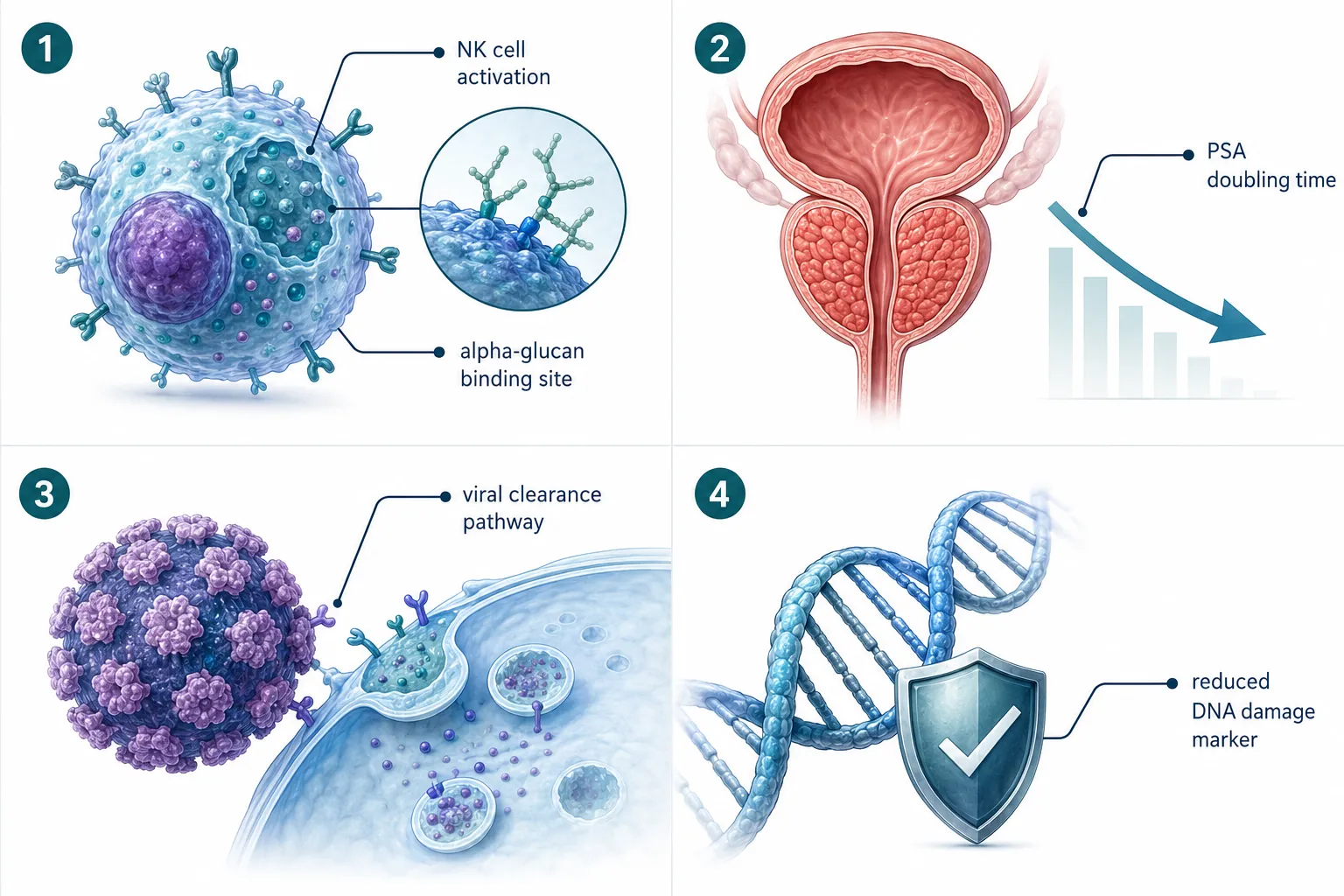
Separate non-randomized data suggest that in some early-stage prostate cancer cohorts, AHCC supplementation was associated with prolonged PSA doubling times, for example, 17 of 31 patients achieving a PSA doubling time of 120 months or longer. PSA doubling time matters clinically because faster doubling times correlate with more aggressive disease behavior. These findings are hypothesis-generating. They come from studies without randomized controls, so confounding factors cannot be ruled out.
A single case report from 2009 described a dramatic PSA response in one man with metastatic castration-resistant prostate cancer. That result has not been reproduced in any controlled trial in the years since. One case report does not establish efficacy.
Preclinical work published in 2023 showed that a standardized AHCC extract down-regulated cortactin, a protein linked to cell motility, in prostate cancer cell lines, suggesting a potential anti-invasive effect. Cell models are a starting point for research, not a clinical recommendation. No trial has yet shown that targeting cortactin with AHCC reduces metastasis or improves survival in men.
A combination supplement study using AHCC alongside genistein (a soy isoflavone) in 32 men with metastatic prostate cancer found no significant changes in standard biochemical cancer markers, but did show reduced DNA damage in blood lymphocytes and significant cholesterol reductions in men who entered the study with high cholesterol. No serious adverse events occurred. The broader AHCC benefits evidence covers similar findings across other cancer contexts.
Is AHCC Safe for Men?
Short-term safety data are genuinely reassuring. A Phase I multiple-dose trial in 26 healthy adults, men and women aged 18 to 61, taking 9 g/day of AHCC for 14 days found no laboratory abnormalities. Mild, transient side effects included nausea, diarrhea, bloating, headache, fatigue, and foot cramps. Eighty-five percent of participants tolerated the dose without discontinuing.
A double-blind, placebo-controlled trial in healthy volunteers using 3 g/day found no significant difference in natural killer (NK) cell activity compared with placebo. This tempers the common marketing claim that AHCC reliably “boosts” innate immunity in otherwise healthy people. Immunomodulatory signals exist in some human studies, but the data are inconsistent and not clearly sex-specific.
The safety profile across trials supports the view that AHCC is unlikely to cause harm at typical supplemental doses. What the data do not support is the idea that safety equals efficacy.
Who Is Most Likely to Be Considering AHCC?
The men most likely to be weighing AHCC in 2026 fall into a few distinct groups:
- Men with a confirmed HPV diagnosis, particularly those with persistent high-risk HPV or recurrent genital warts, who are looking for something to support immune clearance alongside standard care. The genital warts overview explains what standard management looks like.
- Men with early-stage prostate cancer on active surveillance, who want to explore adjunct supplements while monitoring PSA, and whose oncologist is open to discussing integrative options.
- Immunocompromised men, including those living with HIV or on immunosuppressive therapy after organ transplant, for whom HPV clearance is slower and the rationale for immune support is stronger, though AHCC has not been specifically studied in this population.
- Men with HPV-positive oropharyngeal cancer, where the ongoing clinical trial may eventually provide relevant data, but currently does not.
Frequently Asked Questions
Can AHCC clear HPV in men the way some studies suggest it does in women?
The honest answer is: possibly, but there is no male-specific clinical trial confirming this. The biological mechanism would be the same, immune-mediated viral clearance, but HPV testing in men is limited, which makes it difficult to design or interpret such a trial. The safety profile is favorable, so the risk of trying it is low; the certainty of benefit is not established.
Does AHCC interact with prostate cancer treatments like hormone therapy or chemotherapy?
No serious interactions have been reported in the trials conducted so far, but those trials were not designed to detect drug interactions. Talk to your oncologist before adding any supplement during active cancer treatment, this applies to AHCC as it does to anything else.
How does AHCC differ from other mushroom supplements like turkey tail or reishi?
AHCC is specifically standardized for its alpha-glucan content and is produced through a proprietary fermentation process. Other medicinal mushroom extracts contain different active compounds, beta-glucans, triterpenes, and have their own separate evidence bases. They are not interchangeable. The AHCC category hub covers how AHCC fits within the broader landscape of mushroom-derived supplements.
What dose of AHCC have studies used in men?
Prostate cancer trials have used 4.5 g/day for six months. The HPV trials, primarily in women, have used approximately 3 g/day for six months. The Phase I safety trial tested 9 g/day for 14 days. There is no established optimal dose for men specifically, and dosing in practice should be discussed with a clinician.
Should men with HPV take AHCC instead of getting vaccinated?
No. The HPV vaccine prevents new infections from the types it covers, it does not treat existing infections, and AHCC does not replace it. If you are within the eligible age range, vaccination remains the most evidence-backed preventive tool available. The HPV testing guide explains how to understand your current HPV status before making any supplementation decision.
What the Evidence Means for Your Next Step
AHCC for men sits in a familiar place in integrative medicine: a plausible mechanism, a reasonable safety profile, and a clinical evidence base that is still catching up to the interest. The prostate cancer data suggest it may support quality of life and possibly slow PSA progression in some men, not that it treats cancer. The HPV data suggest it may support immune clearance, not that it replaces monitoring or treatment.
If you are considering AHCC, bring the actual trial data to your conversation with your doctor rather than supplement marketing claims. Cell changes and persistent HPV infections are easiest to manage when they are caught and tracked early, that is what regular screening is for, and no supplement changes that calculus.