Condoms reduce the risk of getting HPV, but they do not prevent it completely. That distinction matters, and it’s not a reason to stop using them. Consistent, correct condom use is associated with roughly a 50-70% lower risk of acquiring a new HPV infection, which is meaningful protection. The gap exists because HPV spreads through skin-to-skin contact, and a condom simply cannot cover every part of the genital area where the virus can live.
Key Takeaways
- Consistent condom use lowers the risk of new HPV infection by approximately 50-70%, based on longitudinal cohort data.
- HPV is transmitted through direct skin-to-skin contact, including areas of the vulva, scrotum, perineum, and perianal skin that condoms do not cover.
- Condoms may also help existing HPV infections clear faster and reduce the likelihood of HPV-related cell changes progressing.
- No single method, condoms, vaccination, or screening alone, provides complete protection. The evidence supports using all three together.
- Technique matters: a condom only reduces HPV risk if it is used from the very start of sexual contact, every time.
How Do Condoms Prevent HPV, and Where Do They Fall Short?
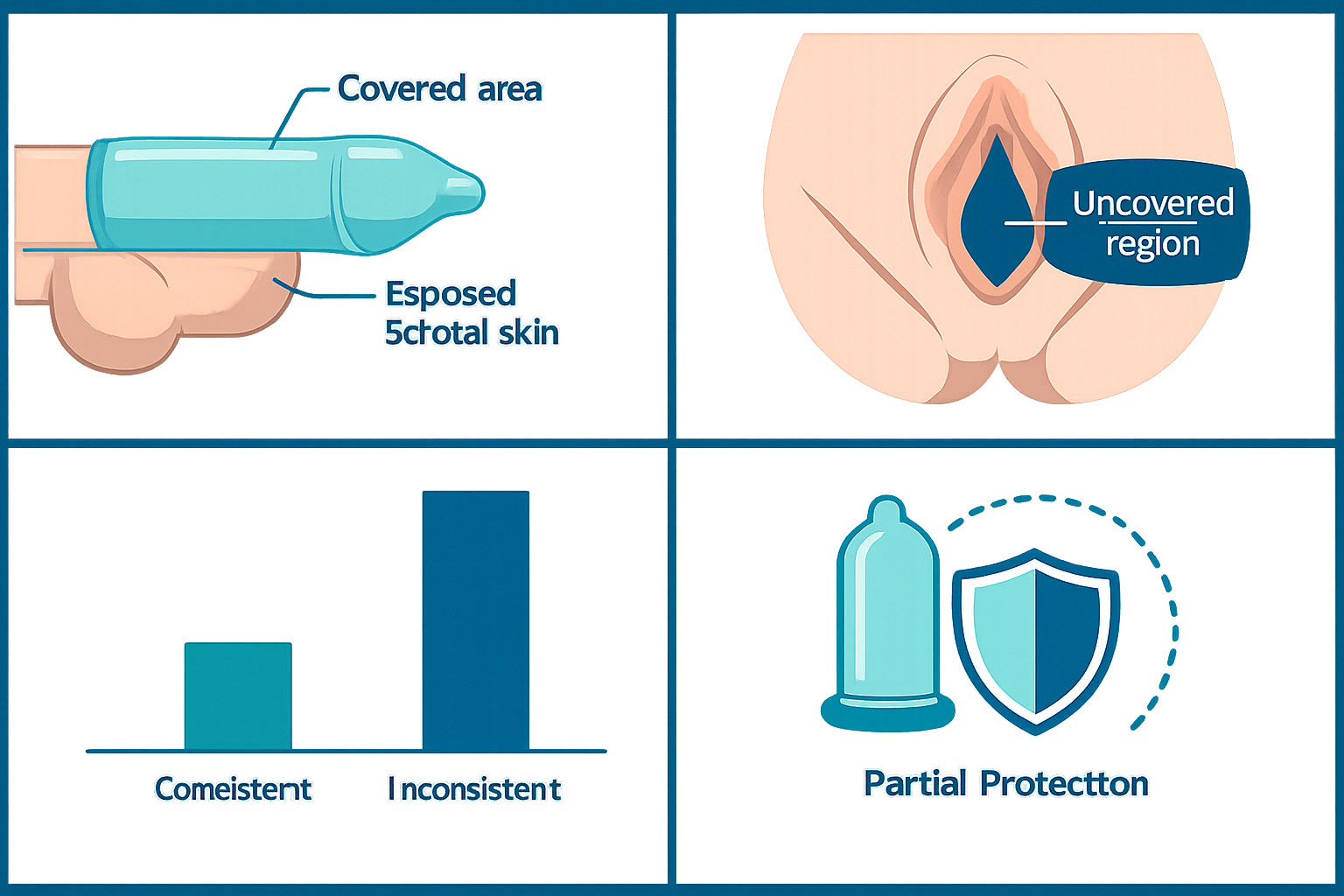
HPV is not transmitted through bodily fluids the way HIV or gonorrhea are. It spreads through direct contact between skin and mucous membranes, which means the virus can be present on the shaft of the penis, the vulva, the scrotum, the perineum, and the perianal region. A standard male condom covers the penile shaft during intercourse, but it leaves the base of the penis, the scrotum, and surrounding skin exposed. Female condoms provide somewhat broader coverage of the vulva and vaginal opening, but the same principle applies: there is always skin that the barrier does not reach.
That anatomical reality is why condoms offer partial, not complete, protection against HPV. The virus can be transmitted from or to any uncovered area, even when a condom is used correctly the entire time.
The numbers are still worth understanding. One of the most cited studies on this question, a longitudinal cohort of young women published in the New England Journal of Medicine, found that women whose partners used condoms every time had an HPV incidence of about 37.8 infections per 100 patient-years, compared with 89.3 per 100 patient-years among women whose partners used condoms less than 5% of the time. That translates to roughly a 70% reduction in new infections for consistent users. In men, prospective cohort data show a smaller but still substantial benefit: consistent condom users have approximately 50% lower risk of acquiring HPV compared with non-users or inconsistent users over a 12-month period.
There is also evidence that condoms help the body clear existing infections. Studies show that consistent use is associated with higher rates of HPV clearance, faster regression of cervical intraepithelial neoplasia (CIN), and regression of HPV-related penile lesions. That is a clinically relevant benefit beyond just preventing new infections.
Understanding which HPV types carry the most serious risks, including high-risk types 16 and 18, which are responsible for the majority of HPV-related cancers, is covered in the HPV types guide.
Does It Matter How You Use a Condom?
Yes, significantly. The 70% risk reduction in the data above applies to consistent users, meaning a condom was used from the very beginning of every sexual encounter, not just for part of it. Putting a condom on partway through intercourse does not provide the same protection, because skin-to-skin contact has already occurred.
A few practical points the evidence supports:
- Use a condom before any genital contact begins, not after penetration starts.
- Use a new condom for every sexual act, vaginal, anal, and oral.
- Condoms should not be reused.
- Dental dams provide equivalent partial protection for oral-vaginal and oral-anal contact.
Inconsistent use, even occasionally skipping a condom, substantially narrows the gap between “always use” and “never use” groups in the data. The protection is real, but it is directly tied to how reliably condoms are used.
For a broader look at how HPV is transmitted beyond penetrative sex, the guide to HPV transmission through oral sex covers what the evidence shows for that route specifically.
Who Is at Higher Risk of HPV Transmission Despite Condom Use?
Condoms reduce risk across the board, but certain groups face a higher baseline risk of acquiring HPV or experiencing complications if they do.
- Unvaccinated people, the HPV vaccine covers types 6, 11, 16, 18, and several others; without it, condoms are the only barrier method in place.
- Immunocompromised individuals, people living with HIV, organ transplant recipients, or anyone on long-term immunosuppressive therapy are less likely to clear HPV naturally and more likely to develop persistent infections or HPV-related lesions.
- People with multiple or new sexual partners, higher exposure frequency increases the probability that a gap in condom coverage will coincide with an infected area.
- People with a history of abnormal Pap results, existing high-risk HPV infection or cervical dysplasia means that reinfection or persistence is a greater concern, and condom use alone is not a substitute for continued screening.
Do Condoms Prevent HPV the Same Way They Prevent Other STIs?
Not exactly. For infections transmitted primarily through fluids, such as HIV, chlamydia, and gonorrhea, a properly used condom blocks the main transmission route directly. The protection rates for those infections are higher because the barrier covers the relevant exposure site in most cases.
HPV is different because the infectious material is in the skin itself, not just in fluids. Any skin-to-skin contact in the genital region can transmit the virus, which means condoms provide meaningful but structurally limited protection compared with their effectiveness against fluid-borne infections.
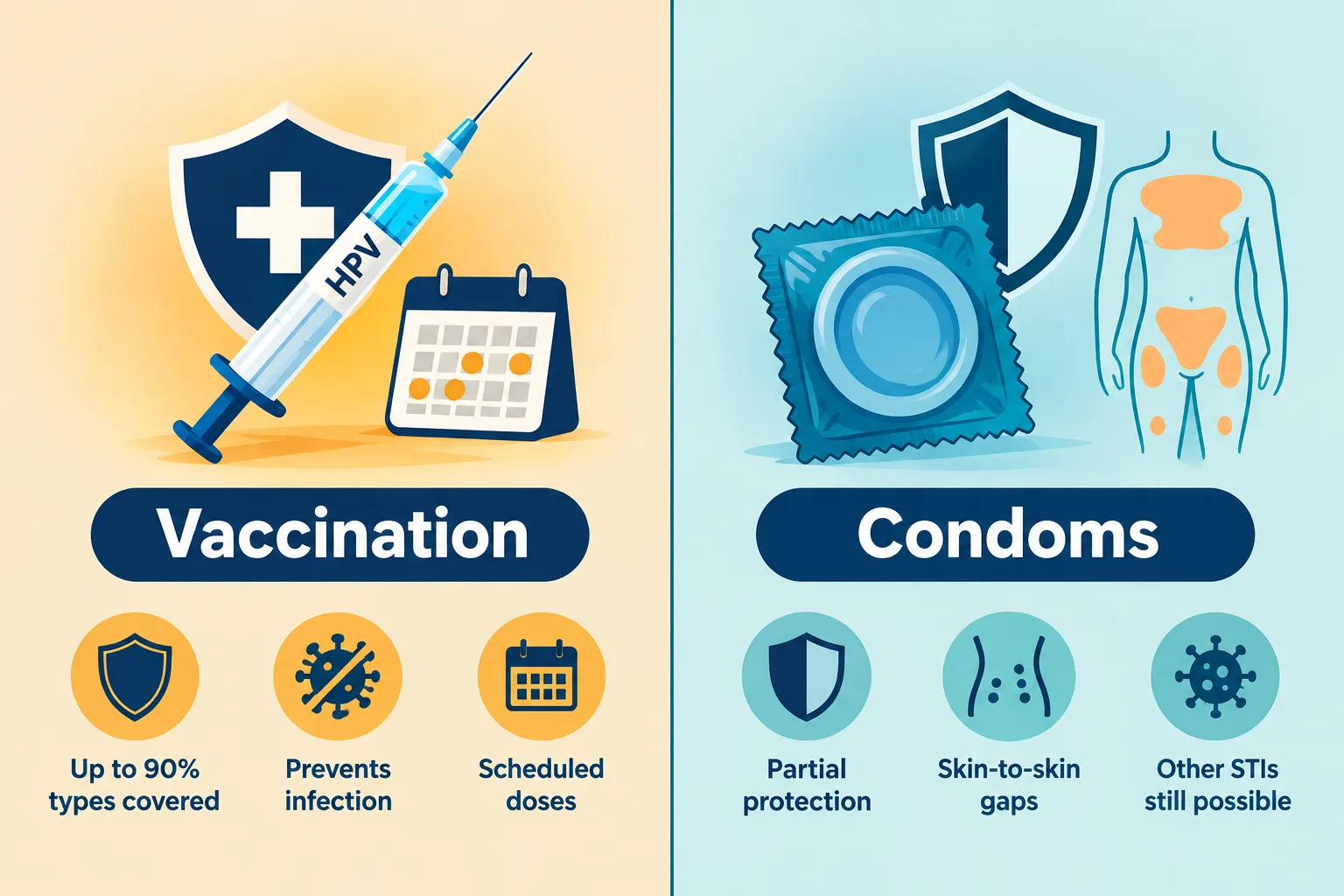
This is also why the HPV vaccine fills a gap that condoms cannot. The vaccine does not depend on coverage of a specific anatomical site, it trains the immune system to recognize and respond to specific HPV genotypes before exposure occurs. Current vaccines protect against the high-risk types responsible for most HPV-related cancers and the low-risk types (6 and 11) responsible for the majority of genital warts cases. The HPV vaccine guide explains how the vaccine works, who it is recommended for, and the current schedule.
Condoms, the HPV Vaccine, and Screening: How They Work Together
Public health guidance in 2026 is consistent across major organizations: condoms, vaccination, and regular screening are complementary strategies, not interchangeable ones. Each addresses a different part of the risk picture.
| Strategy | What it does | What it does not do |
|---|---|---|
| Condoms (consistent use) | Reduces new HPV acquisition by ~50-70%; may help clear existing infections | Does not cover all exposed skin; does not treat existing infection |
| HPV vaccination | Prevents infection from specific high-risk and low-risk genotypes | Does not treat existing infections; does not cover all HPV types |
| Cervical/anal screening | Detects cell changes early, before they progress | Does not prevent HPV infection; does not eliminate the virus |
Cell changes caused by high-risk HPV are easiest to manage before they progress, that is what screening is designed to catch. An abnormal Pap smear result does not mean cancer; it means cell changes have been found early enough to monitor or treat. Understanding what happens after that result is a practical next step for anyone navigating this.
For people already diagnosed with HPV, the question of what to do next, including whether sexual activity needs to change, is addressed in the guide to having sex with HPV.
The HPV and cancer guide covers which cancers are linked to specific HPV types, how the progression from infection to cancer actually works, and what the realistic timelines and risks look like.
Frequently Asked Questions
Can you still get HPV if a condom was used correctly every time?
Yes. Consistent, correct condom use substantially lowers the risk, by roughly 50-70% based on the available data, but does not reduce it to zero. HPV can be present on genital skin that the condom does not cover, including parts of the vulva, scrotum, and perineum, and transmission can occur through that contact.
Do condoms help if one partner already has HPV?
The evidence suggests yes, in two ways. Condoms reduce the likelihood of transmitting HPV to a partner who does not have it, and they are associated with faster clearance of existing infections and regression of HPV-related lesions in both partners. They are not a treatment, but consistent use appears to support the immune system’s ability to resolve an infection.
Does the type of condom matter, latex versus non-latex?
Latex and polyurethane condoms both provide a physical barrier. The key variable in the data is consistent, correct use, not the specific material. Internal (female) condoms cover a broader area of the vulva and vaginal opening, which may offer somewhat wider coverage, though head-to-head comparison data for HPV specifically are limited.
Is there any point in using condoms if both partners already have HPV?
There is still a reason to consider it. Different people can carry different HPV genotypes, and reinfection with a new type is possible. Consistent condom use may also support faster clearance of existing infections. A clinician familiar with both partners’ test results is the right person to advise on this specifically.
Does condom use affect HPV-related cancer risk?
Indirectly, yes. Condoms lower the risk of acquiring high-risk HPV types in the first place, and evidence shows they are associated with higher rates of regression of cervical intraepithelial neoplasia. Since persistent infection with high-risk types like HPV 16 and 18 is the driver of most HPV-related cancers, reducing acquisition and supporting clearance both contribute to lower long-term risk.
What to Do With This Information
Condoms are a genuinely useful tool for reducing HPV transmission risk, the 50-70% reduction in new infections is not a small effect. The realistic picture is that they work best as part of a broader approach: consistent use from the start of every sexual encounter, combined with HPV vaccination if you are eligible, and regular screening appropriate to your age and risk profile.
If you have questions about your own HPV status, the HPV testing guide explains how testing works, who it is recommended for, and how to read your results. If you have already received a diagnosis and want to understand what it means for your health and your relationships, the HPV treatment overview covers how the virus and its symptoms are managed and what the monitoring process looks like.