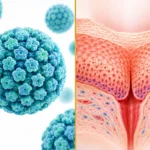
No human clinical trial has tested AHCC in pregnant women. That single fact shapes every answer on this page.
AHCC, a standardized extract derived from shiitake mushroom mycelium, has a reasonable safety record in non-pregnant adults, and the question of whether you can take AHCC while pregnant comes up often, especially among people managing an HPV infection during pregnancy. The short answer is: the evidence doesn’t support it during pregnancy, and most clinical guidance says to avoid it until more data exists.
Here’s what that actually means for you.
Key Takeaways
- No human clinical trials have included pregnant or breastfeeding women, so AHCC’s safety in pregnancy is genuinely unknown.
- Current pharmacology guidance and expert consensus classify AHCC as “avoid during pregnancy”, not because it is proven harmful, but because it is unproven safe.
- New animal studies from 2025 suggest reproductive safety, but animal data does not replace human data.
- If you have HPV and are pregnant, your OB-GYN or midwife is the right person to guide supplement decisions, not product labeling.
- Anecdotal use during pregnancy exists but carries no medical weight as evidence.
What Is AHCC and Why Do People Take It During Pregnancy?
AHCC (Active Hexose Correlated Compound) is a fermented extract made from the mycelium of shiitake mushrooms (Lentinula edodes). Its primary studied mechanism is immune modulation, specifically, it appears to increase natural killer (NK) cell activity and support macrophage function. For a detailed breakdown of what goes into the extract, the page on what’s actually in AHCC covers the compound’s composition in full.
The reason pregnant people ask about AHCC is almost always HPV. An HPV diagnosis during pregnancy is understandably alarming, and the interest in AHCC for HPV clearance, backed by a small but growing body of research, leads some people to wonder whether continuing or starting AHCC during pregnancy makes sense.
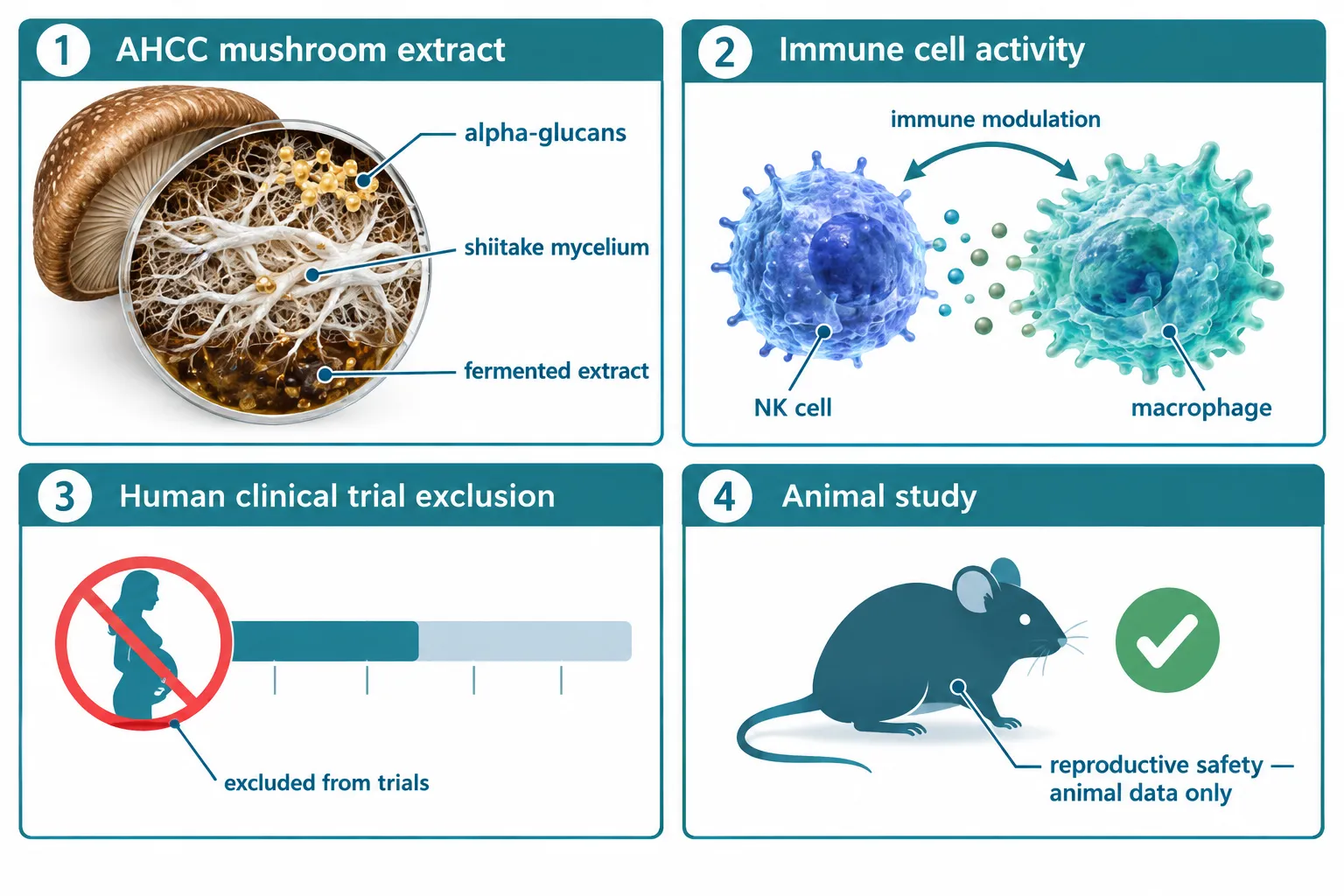
The research on AHCC for HPV clearance is genuinely promising in non-pregnant adults. A 2014 pilot study and subsequent trials showed statistically significant HPV clearance rates in women taking 3g of AHCC daily. But every one of those trials excluded pregnant participants. That exclusion isn’t a formality, it reflects a real gap in safety data.
Why the Safety of AHCC in Pregnancy Is Considered Unknown
“Unknown” doesn’t mean dangerous. It means untested.
Pharmaceutical and supplement safety classifications during pregnancy rely on controlled human data, and for AHCC, that data simply doesn’t exist. The compound has not been studied in pregnant populations in any published human trial as of 2026. Because of this, authoritative pharmacology references categorize AHCC as “avoid during pregnancy”, a precautionary classification, not a toxicity warning.
The distinction matters. AHCC is not classified alongside supplements that have demonstrated fetal harm. It sits in the much larger category of substances where no one has done the work to establish safety.
Animal studies published in 2025 do offer some reassurance. Reproductive toxicology data from those studies showed no significant adverse effects on fetal development in rodent models. That’s meaningful preliminary information. It is not, however, a green light for human use during pregnancy, animal reproductive data and human reproductive data are not interchangeable.
Product labeling and commercial guidance for AHCC supplements consistently carry a “not recommended during pregnancy or breastfeeding” statement. That language reflects the same gap: manufacturers know what the clinical trial record does and doesn’t include.
Who Should Be Especially Cautious About AHCC During Pregnancy?
The general “avoid” guidance applies to all pregnant people, but a few groups face additional complexity.
- People with high-risk HPV types (16 or 18) and cervical dysplasia. Managing dysplasia during pregnancy already involves careful colposcopy monitoring and deferred treatment decisions. Adding an unstudied supplement to that picture introduces a variable your care team can’t account for.
- Immunocompromised pregnant people. Those with HIV or on immunosuppressive therapy have altered immune baselines. AHCC’s immune-modulating effects are unpredictable in this context, and the interaction with existing immune management during pregnancy has not been studied.
- People in the first trimester. The first trimester carries the highest risk for supplement-related interference with fetal development. Any supplement without confirmed pregnancy safety data carries more theoretical risk in this window.
What the Evidence Shows About AHCC Benefits for Women, and Its Limits
Outside of pregnancy, AHCC has a reasonable evidence base. The AHCC benefits for women page covers the full picture, including what the research supports and where the hype outpaces the data.
For non-pregnant adults, AHCC is generally considered safe at studied doses (typically 3g daily in HPV trials). Side effects are mild and infrequent, the AHCC side effects data from published studies shows mostly gastrointestinal symptoms at higher doses.
None of that safety profile transfers automatically to pregnancy. The immune system during pregnancy operates differently by design, it modulates tolerance toward the fetus, a process that involves the same NK cells and cytokine pathways that AHCC is thought to influence. Whether AHCC’s immune-modulating effects are neutral, beneficial, or potentially disruptive to that fetal-tolerance mechanism during pregnancy has not been studied. Most experts agree that any compound affecting NK cell activity warrants caution in pregnancy until data exists.
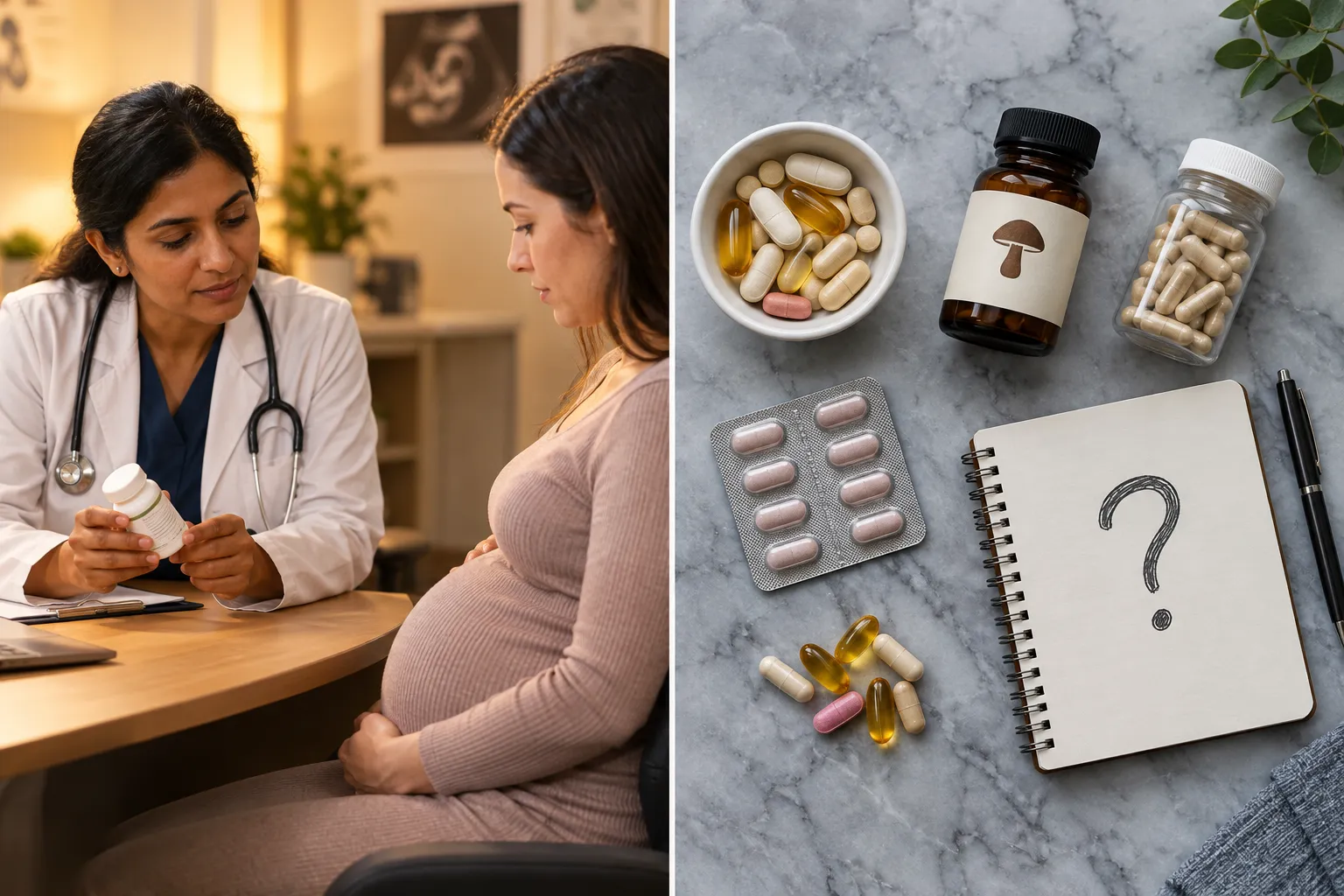
The honest answer is that the gap in evidence cuts both ways: AHCC is not proven harmful in pregnancy, and it is not proven safe. Precautionary guidance defaults to “avoid” when that’s the situation.
What to Do If You Have HPV and Are Currently Pregnant
Having HPV during pregnancy doesn’t mean your baby is at risk of serious harm in most cases. Vertical transmission of high-risk HPV types is rare, and the management of cervical changes during pregnancy is well-established, watchful monitoring with colposcopy, with treatment deferred until after delivery in most cases.
If you were taking AHCC before becoming pregnant, talk to your OB-GYN or midwife before continuing. Don’t make that decision based on the supplement label or forum posts. Your provider needs to know what you’re taking to give you accurate prenatal care.
If you’re asking because you want to do something active about an HPV infection during pregnancy, that instinct is understandable. The evidence-based answer is that cervical cell changes caught during pregnancy are monitored closely, and the immune system’s natural clearance mechanisms continue to function during pregnancy, AHCC or not.
Frequently Asked Questions
Is AHCC proven harmful during pregnancy?
No. AHCC has not been shown to cause harm in pregnancy in any published study. The “avoid” classification exists because safety has not been established, not because toxicity has been demonstrated. Those are different situations, and it’s worth understanding the difference.
Can I take AHCC while breastfeeding?
The same gap in evidence applies. No human studies have examined AHCC transfer into breast milk or its effects on nursing infants. Most clinical guidance extends the “avoid” recommendation to breastfeeding for the same reason it applies to pregnancy: insufficient data.
Will stopping AHCC during pregnancy undo any HPV clearance progress?
There’s no published data on this specific question. What the HPV research shows is that clearance, when it occurs, appears to happen over months of consistent use. Pausing during pregnancy and resuming afterward is a reasonable approach to discuss with your provider, but no trial has tracked that specific scenario.
Are there any supplements that are safe to take for HPV during pregnancy?
Folate and prenatal vitamins support general immune health and are recommended during pregnancy regardless of HPV status. Some evidence supports adequate vitamin D levels for immune function. Neither is a substitute for HPV monitoring. Any supplement specifically marketed for HPV clearance should be discussed with your OB-GYN before use during pregnancy.
Does having HPV during pregnancy affect my delivery options?
In most cases, no. Genital warts caused by low-risk HPV types 6 and 11 can sometimes be treated during pregnancy if they are large enough to obstruct delivery, but this is uncommon. High-risk HPV types without visible lesions don’t typically affect delivery planning. Your provider will assess your specific situation.
What This Means for You Right Now
The consensus as of 2026 is clear: AHCC is not recommended during pregnancy, not because it is known to be dangerous, but because no one has tested it in pregnant people. That’s a meaningful distinction, but it doesn’t change the practical guidance.
If you’re pregnant and managing an HPV diagnosis, the most useful next step is a direct conversation with your OB-GYN or midwife, not about supplements specifically, but about your current cervical health status, what monitoring looks like during your pregnancy, and what the plan is postpartum. Cell changes are easiest to manage when they’re caught and tracked early; that’s what prenatal colposcopy monitoring is for.
If you want to understand AHCC’s broader evidence base before that conversation, the AHCC and cervical cancer research page covers what the studies show in non-pregnant populations. That context can help you ask better questions.