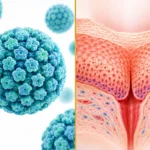
Oral sex is one of the most common routes for HPV transmission, and it’s also one of the least talked about. Yes, you can get HPV from oral sex, and the virus can establish infection in the mouth and throat just as it does in the genitals. Most oral HPV infections clear on their own, but persistent infection with high-risk types, particularly HPV-16, is now the leading cause of oropharyngeal (throat) cancer in the United States.
That’s a fact worth knowing clearly, not a reason to panic.
Key Takeaways
- Oral sex is a well-documented transmission route for HPV, including high-risk types like HPV-16
- Most oral HPV infections resolve without treatment, just as genital infections do
- Persistent oral HPV-16 is linked to oropharyngeal cancer, which has been rising in the U.S. for decades
- There is no approved routine screening test for oral HPV
- HPV vaccination significantly reduces the types most responsible for throat cancer
How Does HPV Transmit Through Oral Sex?
HPV spreads through direct skin-to-skin and mucous membrane contact. During oral sex, the virus can pass from the genitals or anal area to the mouth and throat, or in the other direction.
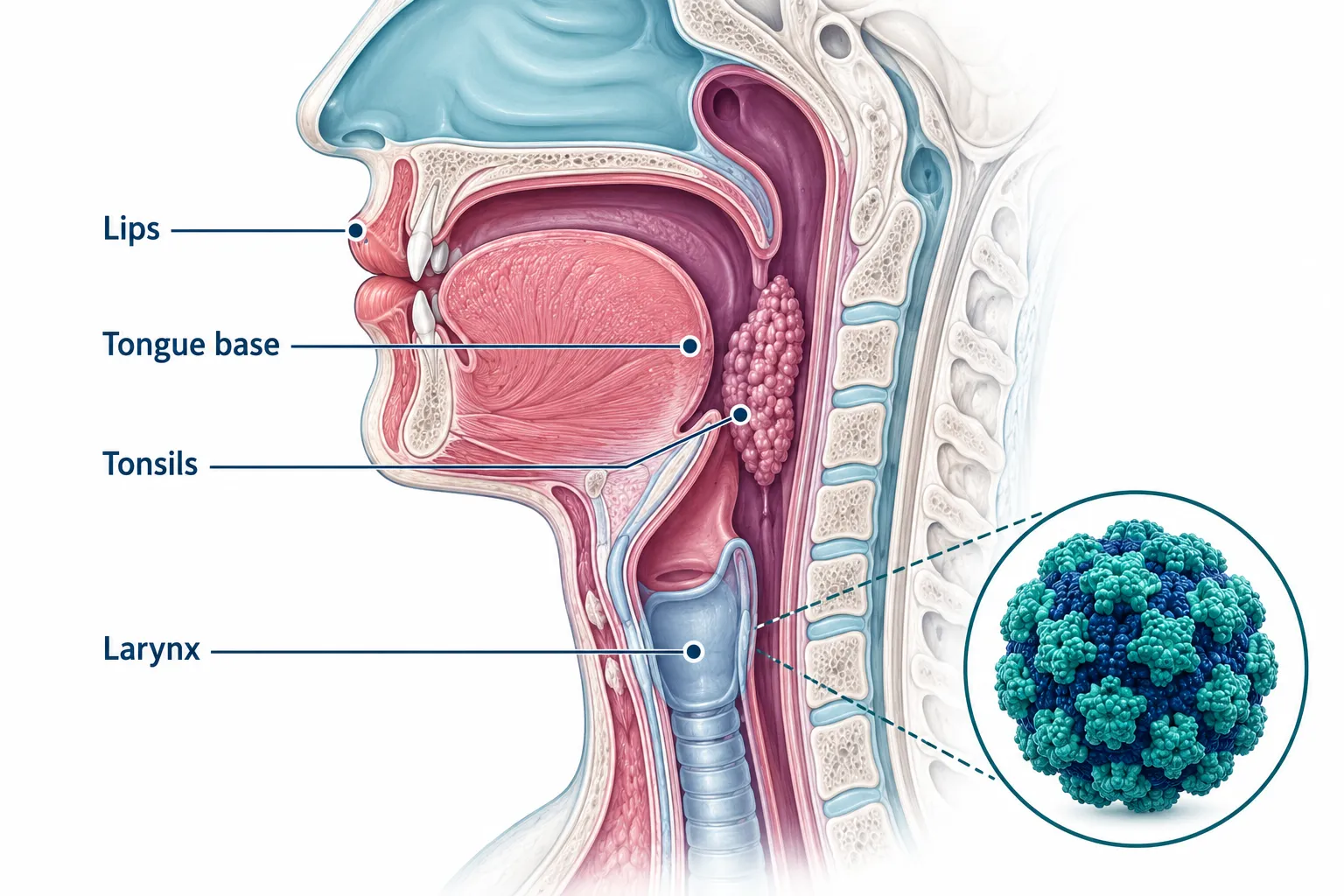
The virus enters through the mucous membranes lining the mouth, tongue base, tonsils, and throat. These tissues are structurally similar to the cervical transformation zone, which is why they’re vulnerable to the same high-risk HPV types. HPV-16 accounts for the majority of HPV-related oropharyngeal cancers, the same genotype responsible for most cervical cancers.
Deep kissing (open-mouth, tongue contact) is also considered a possible transmission route, though the evidence is less consistent than for oral sex. Casual contact, sharing a drink, a kiss on the cheek, is not a documented source of oral HPV infection. The relationship between HPV and saliva transmission is more nuanced than most people assume, and routine social contact does not carry meaningful risk.
The number of oral sex partners is the strongest behavioral predictor of oral HPV infection. Having six or more lifetime oral sex partners roughly quadruples the risk compared to having none.
What Is Oral HPV and What Can It Cause?
Oral HPV refers to infection with HPV in the tissues of the mouth, throat, or oropharynx. Most people who acquire it never know, there are no symptoms, no visible changes, and the immune system clears the infection within one to two years.
The concern is the minority of infections that don’t clear. Persistent infection with HPV-16 in the oropharynx can, over many years, lead to cellular changes and eventually oropharyngeal cancer, a cancer of the back of the throat, tonsils, and base of the tongue. This cancer has been increasing steadily in the U.S. since the 1980s, driven largely by oral sex-related HPV exposure rather than tobacco use. It now represents the most common HPV-associated cancer in the country, surpassing cervical cancer in total case numbers.
The timeline from initial infection to cancer, when it occurs, is typically measured in decades, not months or years. That long window is why most people with oral HPV will never develop cancer, and why the infection itself is not a diagnosis of cancer or even a guarantee of precancerous change.
Understanding how HPV connects to cancer more broadly helps put this risk in proportion.
Who Is at Higher Risk for Oral HPV Infection?
Not everyone faces the same level of risk. These groups have meaningfully higher rates of oral HPV infection or are more likely to experience persistent infection:
- People with multiple oral sex partners, the number of partners is the single strongest predictor of oral HPV acquisition
- Immunocompromised individuals, those living with HIV, organ transplant recipients, or anyone on long-term immunosuppressive therapy are less able to clear HPV infections naturally
- Unvaccinated adults, people who didn’t receive the HPV vaccine before exposure to the relevant genotypes have no immune protection against HPV-16 and other high-risk types
- Smokers, tobacco use impairs local immune response in the oral mucosa and is an independent risk factor for HPV persistence and progression
Can You Get HPV from Oral Sex Without Symptoms?
Yes, and this is the most important practical point. HPV produces no symptoms in the vast majority of oral infections. There are no sores, no visible changes, no discomfort. You can acquire oral HPV, carry it, and transmit it without knowing any of it is happening.
This is not unique to oral HPV. The same is true of genital HPV infection, which is why the virus is so widespread. The CDC estimates that nearly all sexually active adults will have HPV at some point, and most will never know.
There is currently no approved, routine clinical test for oral HPV. Unlike cervical HPV, which can be detected through a standard HPV test, there is no equivalent screening tool for the mouth or throat in general use. Oral rinse tests exist in research settings, but they are not part of routine care in 2026.
If you have concerns about symptoms, a persistent sore throat, difficulty swallowing, a lump in the neck, or a non-healing mouth sore lasting more than three weeks, those warrant evaluation by a doctor. Those symptoms don’t mean HPV cancer, but they are worth investigating.
Does the HPV Vaccine Protect Against Oral HPV?
The HPV vaccine protects against the genotypes it covers, regardless of where in the body exposure occurs. The current 9-valent vaccine (Gardasil 9) includes HPV-16 and HPV-18, the two types responsible for the majority of HPV-related oropharyngeal cancers.
Vaccination before exposure provides the strongest protection. The HPV vaccine guide covers the full schedule, age recommendations, and what the evidence shows for people who’ve already been sexually active. Getting vaccinated after some sexual activity still provides meaningful protection against types you haven’t yet encountered.
Barrier methods, dental dams during oral-vaginal or oral-anal contact, condoms during oral-penile contact, reduce but don’t eliminate transmission risk. HPV can infect areas not covered by a barrier.

Reducing Risk When You Already Have HPV
If you’ve been diagnosed with genital HPV and are wondering about oral transmission to a partner, or vice versa, the honest answer is that the risk of transmission exists and can’t be entirely eliminated. What you can do is reduce it.
Barrier use during oral sex lowers transmission probability. Vaccination, for you and your partner, if not already done, covers the highest-risk genotypes. And for partners who haven’t been vaccinated, the HPV vaccine for men is recommended up to age 26, and may be considered up to 45 after discussion with a doctor.
For genital HPV specifically, the HPV treatment overview explains what can and can’t be treated, and why the virus itself, as distinct from its symptoms, doesn’t have a cure but often resolves on its own.
Frequently Asked Questions
Can you get HPV in your throat from giving oral sex?
Yes. Oral sex involving the genitals or anal area can transmit HPV to the throat and oropharynx. HPV-16 is the type most commonly associated with throat infection and oropharyngeal cancer. Most people who acquire oral HPV clear it without any intervention.
Is oral HPV the same as genital HPV?
They involve the same virus types. HPV-16, for example, can infect both genital tissue and oropharyngeal tissue. The location of infection differs, but the underlying genotypes are often identical. A genital HPV diagnosis doesn’t automatically mean you have oral HPV, and vice versa.
Can HPV spread from the mouth to the genitals?
Transmission in this direction is theoretically possible but less well-documented than genital-to-oral transmission. The evidence base is stronger for oral sex as a route from genitals to throat. If you have questions about a specific situation, a sexual health clinician can give you a clearer picture.
Should I tell a partner about my HPV before oral sex?
This is a personal and medical decision. HPV is extremely common, often asymptomatic, and frequently present without a formal diagnosis. Many sexual health clinicians recommend honest conversation about STI status, including HPV. The guide on having sex with HPV addresses disclosure and risk-reduction in more detail.
Does oral HPV always lead to cancer?
No. The overwhelming majority of oral HPV infections, including high-risk types, clear on their own within one to two years. Persistent infection with HPV-16 over many years is what drives cancer risk, and even persistent infection does not guarantee cancer development. Regular monitoring and prompt evaluation of any persistent throat symptoms are what catch problems early.