A newborn can be exposed to human papillomavirus during or around birth, this is documented, though it happens far less often than HPV spreads between adults. The question of whether you can be born with HPV is not a hypothetical: researchers have detected HPV DNA in newborns and young infants, and in some cases the same viral genotype found in the infant matches the one found in the parent, which points to genuine vertical transmission rather than coincidence.
That said, most of these early-life infections appear to be transient. The infant’s immune system clears the virus without it ever causing symptoms or disease.
Key Takeaways
- Vertical transmission of HPV, from parent to infant during or around birth, is biologically possible and well-documented in research
- Most HPV detected in newborns appears to be transient and clears without causing disease
- The most common route is perinatal (during passage through the birth canal), but prenatal and postnatal routes have also been studied
- HPV-related disease in children is rare overall, even when early exposure has occurred
- Cesarean delivery reduces but does not eliminate transmission risk
How HPV Transmission from Parent to Newborn Actually Works
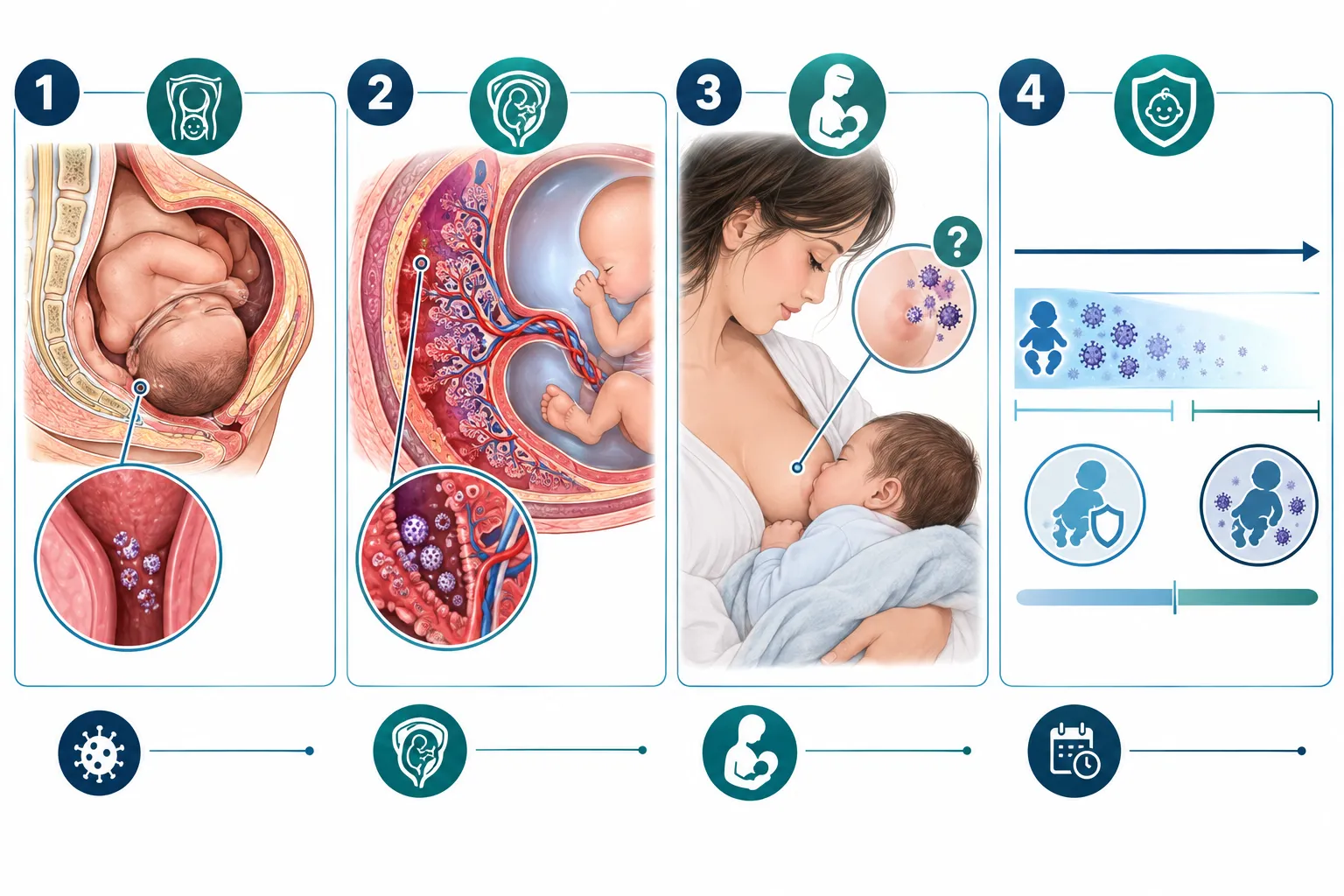
Vertical transmission is the medical term for a pathogen passing from a parent to a child during pregnancy, delivery, or the early postnatal period. With HPV, researchers have identified three distinct windows when this can happen.
Perinatal transmission, during labor and delivery, is the most studied and most common route. As the infant passes through the birth canal, direct contact with HPV-infected genital tissue can expose the mouth, throat, eyes, and skin. Type-specific concordance studies, where the same HPV genotype is found in both the parent and the newborn, support the idea that this is genuine infection rather than contamination.
Prenatal transmission is less common but documented. HPV DNA has been detected in amniotic fluid and in cord blood samples, suggesting the virus can cross into the fetal environment before labor begins. The mechanism is not fully understood, and the clinical significance of prenatal exposure remains under investigation.
Postnatal transmission, through breastfeeding or close caregiver contact, has also been proposed. HPV DNA has been found in breast milk in some studies. The clinical impact of this route is unclear, and most experts consider it a minor contributor compared to the perinatal route.
A large 2024 Finnish family study found that transmission rates were higher when HPV was detected at multiple anatomical sites in the parent, not just the cervix. This suggests that the viral load and distribution of infection in the parent influence the probability of the infant being exposed.
To understand how HPV spreads more broadly, the guide on how HPV spreads and how it doesn’t covers the full range of transmission routes in adults.
Does Being Born with HPV Mean the Baby Will Have Health Problems?
Most infants who are exposed to HPV around birth do not develop lasting infection or disease. The evidence consistently shows that the majority of HPV detected in newborns is transient, meaning the immune system clears it within weeks to months, and it does not establish a persistent infection.
The most significant HPV-related condition linked to perinatal transmission is recurrent respiratory papillomatosis (RRP), a rare condition where HPV types 6 and 11, both low-risk, non-cancer-causing types, cause wart-like growths in the larynx and airway. RRP is serious because of its location, not because these HPV types are high-risk. It requires ongoing treatment, but it is rare: estimates suggest it affects roughly 4 in 100,000 children, even though HPV infection in pregnant people is far more common than that.
Oral HPV infection detected in young children has been used as supporting evidence for genuine vertical transmission, since sexual contact is not a plausible route at that age.
The overall picture: vertical transmission happens, but HPV-related disease in children remains uncommon. The gap between documented transmission and actual disease reflects how effectively the infant immune system handles early HPV exposure in most cases.
For context on how HPV behaves in adults and why most infections also clear without treatment, the overview of HPV symptoms and why most people have none is worth reading.
Who Is at Higher Risk for Vertical HPV Transmission?
Not every pregnancy carries the same level of risk. The following groups have a higher likelihood of vertical HPV transmission based on current evidence:
- People with active genital warts during pregnancy, caused by HPV types 6 and 11, these represent a higher viral load at the birth canal and are the main risk factor for infant RRP
- Immunocompromised pregnant people, including those living with HIV or on immunosuppressive therapy, tend to have higher HPV viral loads and less effective immune control of the virus
- People with HPV detected at multiple anatomical sites, cervical, vaginal, and vulvar infection simultaneously appears to increase transmission probability compared to a single-site infection
- Infants born to parents with high-risk HPV genotypes, types 16 and 18 have been detected in newborns, though the clinical consequences of high-risk type perinatal exposure are less defined than for types 6 and 11
Does a C-Section Prevent HPV Transmission to the Baby?

Cesarean delivery reduces the infant’s exposure to HPV in the birth canal, but it does not eliminate transmission risk entirely. Prenatal routes, through amniotic fluid or placental transfer, mean that some exposure can occur before labor begins, regardless of delivery mode.
Current obstetric guidelines do not recommend cesarean delivery as a preventive measure for HPV transmission. The evidence does not show a strong enough reduction in infant disease to justify the surgical risks of a C-section for this purpose alone. Active genital warts at the time of delivery are sometimes discussed with the obstetric team, but the decision about delivery mode is made based on the full clinical picture, not HPV status alone.
This is a conversation worth having with a midwife or obstetrician during prenatal care, not a reason to assume a specific delivery plan is required.
Can You Be Born with HPV and Not Know Until Later?
Yes, in a narrow sense. If an infant is exposed to HPV perinatally and the virus does not clear immediately, it could theoretically persist at low, undetectable levels before either clearing or, very rarely, manifesting as disease later in childhood. Recurrent respiratory papillomatosis, for example, is sometimes diagnosed months or years after birth, even though the exposure likely happened at delivery.
For high-risk HPV types, the concern about cancer-causing potential is a long-term adult issue. There is no documented pathway from perinatal high-risk HPV exposure to childhood cancer. The link between HPV and cancer develops over years of persistent infection in adults, not from transient early-life exposure.
If you are pregnant and have a known HPV diagnosis, the appropriate step is to discuss it with your obstetric provider. Routine prenatal care already includes Pap smear and HPV co-testing schedules that cover this, the HPV testing guide explains how those results are read and what follow-up looks like.
What This Means If You Have HPV and Are Pregnant
An HPV diagnosis during pregnancy is not an emergency, and it does not automatically mean your baby will be infected or harmed. The majority of pregnant people with HPV deliver healthy babies with no HPV-related complications.
What matters most:
- Keep up with any recommended cervical screening or colposcopy follow-up, cell changes are easiest to manage before they progress, and that is what monitoring is designed to catch
- Tell your obstetric provider about your HPV status so they can note it in your care plan
- If you have visible genital warts, discuss them with your provider, some treatments are not recommended during pregnancy, and your provider will guide you on safe options covered in the HPV treatment overview
- Vaccination after delivery (if you are under 45 and not yet fully vaccinated) can protect against future reinfection with types you have not yet been exposed to, the HPV vaccine guide covers eligibility and timing
HPV in pregnancy is common. The evidence on vertical transmission is real, but so is the evidence that most infants exposed to HPV do not develop lasting infection or disease.
Frequently Asked Questions
Can HPV be passed to a baby through breastfeeding?
HPV DNA has been detected in breast milk in some studies, which means postnatal transmission through breastfeeding is biologically plausible. However, the clinical significance of this route is unclear, and no major health authority currently recommends against breastfeeding because of HPV. The perinatal route during delivery remains the primary documented pathway.
If my baby was exposed to HPV at birth, will they need to be tested?
There is no routine HPV screening protocol for newborns or infants. Testing is not recommended unless a child develops symptoms, particularly hoarseness, a chronic cough, or breathing changes that could suggest recurrent respiratory papillomatosis. If you have concerns, a pediatrician is the right starting point.
Does having HPV during pregnancy affect the pregnancy itself?
HPV infection does not cause miscarriage, preterm birth, or fetal abnormalities in the way that some other infections can. Genital warts may grow more rapidly during pregnancy due to hormonal changes, but the virus itself does not cross into the fetus in a way that disrupts fetal development.
Can a child get HPV from a caregiver other than during birth?
Non-sexual transmission of HPV through close skin contact is possible, common hand warts, for example, are caused by non-genital HPV types. Genital HPV types in a child who was not perinatally exposed would require investigation, as non-sexual caregiver transmission of genital HPV types is not well-established and other explanations would need to be ruled out.
Does the HPV vaccine protect against the types most linked to infant transmission?
Yes. Gardasil 9 covers HPV types 6 and 11, which are the types responsible for recurrent respiratory papillomatosis in children. Vaccination before pregnancy is one of the most effective ways to reduce the risk of having an active HPV 6 or 11 infection at the time of delivery.