HPV in men can affect fertility, and the evidence for this has grown considerably stronger in recent years. Having HPV doesn’t automatically mean you’ll struggle to conceive, but research now shows that HPV detected in semen is meaningfully linked to lower sperm quality, reduced pregnancy rates, and a higher risk of pregnancy loss.
This isn’t a fringe concern. Studies consistently find that HPV prevalence in semen is roughly two to three times higher in infertile men than in men from the general population. If you’re dealing with unexplained infertility or a partner has raised this question, the connection is worth understanding clearly.
Key Takeaways
- HPV in semen is associated with lower sperm motility and abnormal morphology, two of the parameters most directly tied to fertility.
- High-risk HPV genotypes, such as types 16, 52, and 56, appear more damaging to sperm quality than low-risk types like 6 and 11.
- HPV-positive semen has been linked to higher rates of IVF failure and spontaneous abortion, not just lower sperm counts.
- HPV prevalence in semen is significantly higher in infertile men (around 20%) compared to the general male population (around 8%).
- Vaccination and targeted evaluation by a fertility specialist are the clearest evidence-based steps available right now.
How HPV Affects Sperm Quality
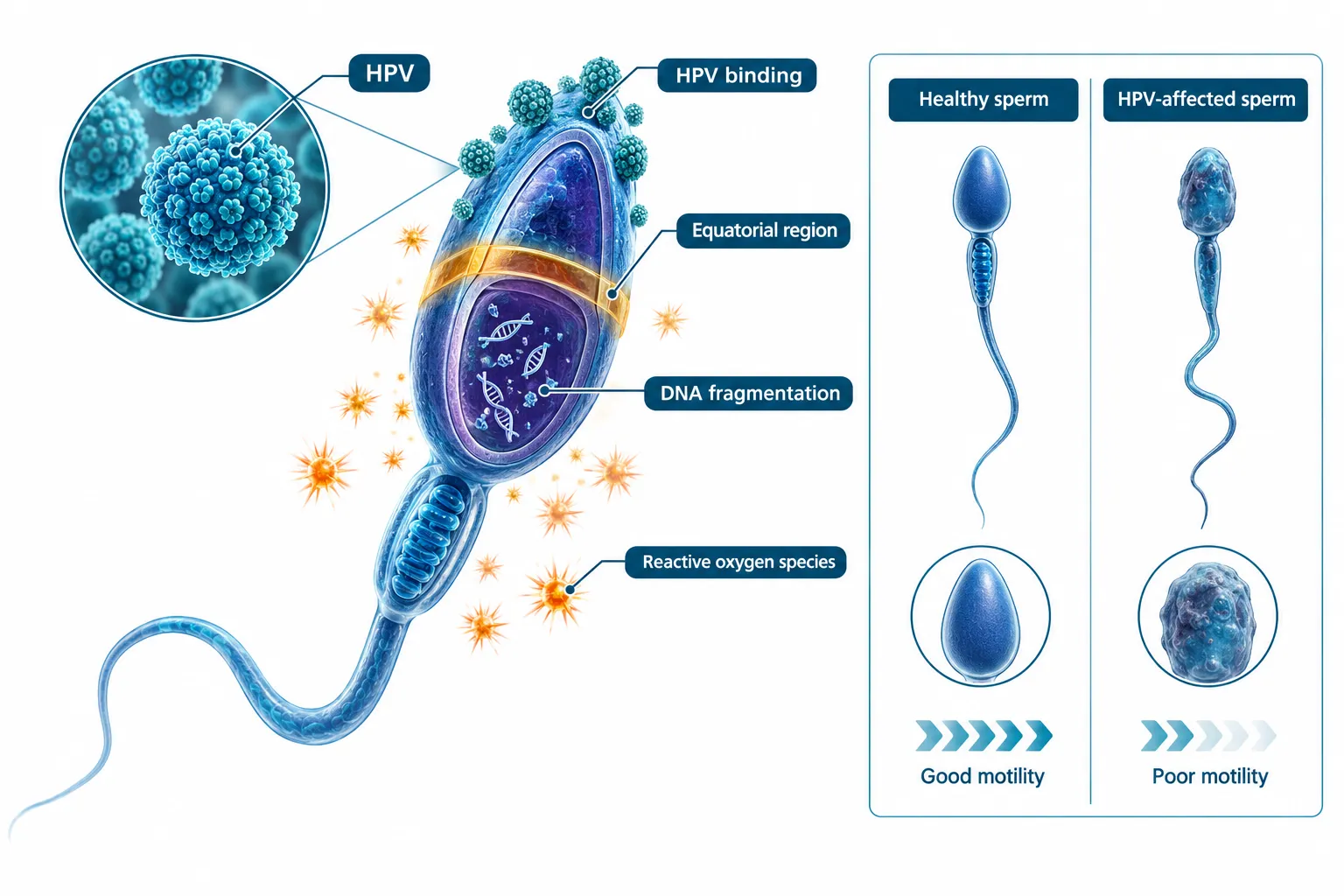
The short answer: HPV can attach directly to the sperm surface, and that attachment causes measurable damage.
Sperm cells have receptor sites that HPV, particularly high-risk genotypes, can bind to, most commonly at the equatorial region of the sperm head. Once bound, the virus doesn’t just hitch a ride. It triggers a chain of effects: increased reactive oxygen species (oxidative stress), DNA strand breaks inside the sperm nucleus, and changes to how the sperm moves.
A systematic review covering nearly 7,000 men found that HPV-positive men had significantly worse sperm motility and morphology than HPV-negative men. Importantly, semen volume, concentration, and pH were less consistently affected, meaning HPV’s primary damage appears to be functional rather than simply reducing sperm count.
High-risk HPV types show a stronger effect. Men carrying high-risk genotypes had higher percentages of dead sperm and elevated reactive oxygen species compared to men with low-risk HPV or no HPV. This oxidative damage is a biologically plausible mechanism: it degrades the sperm’s genetic material and impairs its ability to reach and fertilize an egg.
HPV in semen has also been linked to anti-sperm antibody (ASA) development, an immune response where the body mistakenly targets its own sperm, compounding motility problems.
For a broader picture of how HPV behaves differently across its many genotypes, the HPV types explained guide covers the distinction between high-risk and low-risk strains in detail.
Does HPV in Men Actually Reduce the Chance of Pregnancy?
Yes, and the numbers are specific enough to take seriously.
One study of 226 infertile couples found that pregnancy rates dropped from 38% to 14% when the male partner’s semen tested positive for HPV. That’s not a marginal difference. Other data show that HPV-positive semen is associated with an odds ratio of around 3.3 for male infertility, meaning HPV-positive men are more than three times as likely to be classified as infertile compared to HPV-negative men.
The impact extends into assisted reproduction. HPV DNA on the sperm surface has been associated with failed embryo implantation and higher rates of spontaneous abortion following IVF. This is thought to happen partly because HPV can be transmitted to the embryo via infected sperm, a route called paternal-fetal transmission, which may interfere with early implantation and development.
A 2024 study of men attending fertility clinics found that sperm HPV carriage was associated with an odds ratio of 5.63 for infertility, and men with HPV-positive semen were significantly more likely to show oligozoospermia (low count), asthenozoospermia (poor motility), or teratozoospermia (abnormal morphology) according to WHO semen analysis standards.
The evidence doesn’t yet establish HPV as the sole cause of infertility in any given man. But it’s strong enough that HPV in semen is now being discussed as a marker of male factor infertility, something a fertility specialist should know about.
For context on how HPV testing works and what results actually mean, the HPV testing guide explains the process clearly.
Who’s at Higher Risk for HPV-Related Sperm Damage?
Not every man with HPV will experience fertility problems. The risk is meaningfully higher in certain groups:
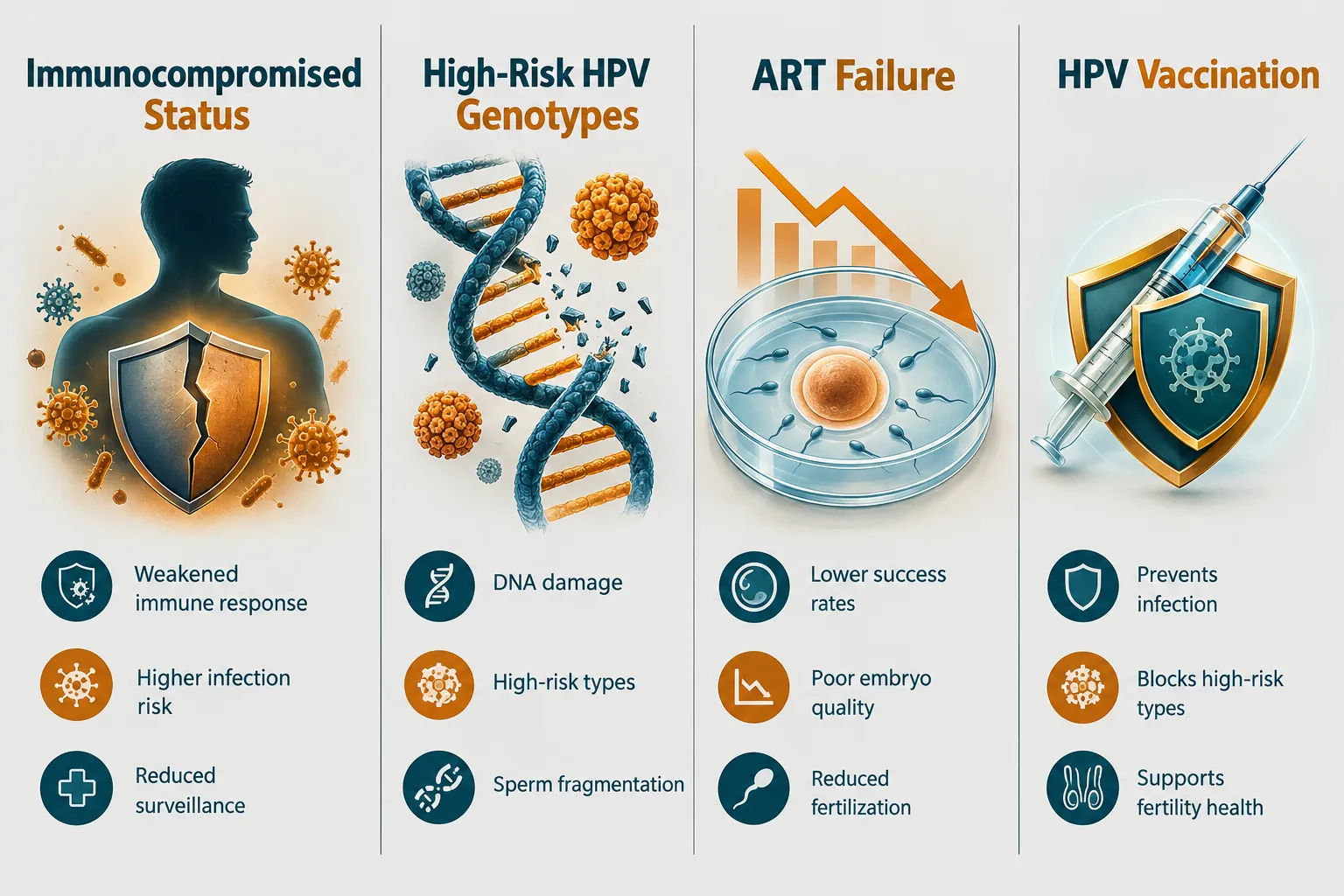
- Men with high-risk HPV genotypes (types 16, 18, 52, 56, and similar): these strains show stronger associations with sperm DNA fragmentation and oxidative stress than low-risk types like 6 and 11.
- Immunocompromised men, including those living with HIV or on immunosuppressive therapy after organ transplant, clear HPV more slowly, increasing the duration of sperm exposure to the virus.
- Unvaccinated men, particularly those who missed the recommended vaccination window, carry a higher likelihood of acquiring and retaining high-risk HPV strains.
- Men with idiopathic (unexplained) infertility: HPV prevalence is disproportionately high in this group, making it a relevant investigation when standard semen analysis doesn’t explain a couple’s difficulty conceiving.
Can HPV in Men Cause Infertility Even Without Symptoms?
This is where the picture gets clinically important. Most men with HPV have no symptoms at all, no warts, no pain, nothing visible. The HPV symptoms guide covers this in detail, but the core point is that HPV in semen is typically silent.
That silence matters for fertility. A man can carry HPV in his semen, experience measurable sperm damage, and have no idea anything is wrong. Standard semen analysis doesn’t test for HPV, it measures count, motility, and morphology, but doesn’t identify the cause of any abnormalities it finds.
This is why some fertility specialists are beginning to include HPV testing of semen as part of a workup for unexplained male infertility, particularly when other causes have been ruled out. The evidence for this approach is still building, but the rationale is sound: if HPV is contributing to sperm DNA fragmentation or poor motility, knowing that changes the clinical picture.
What Can HPV-Positive Men Do About Fertility Concerns?
The most direct step is a conversation with a urologist or reproductive medicine specialist who can assess semen parameters alongside HPV status.
If you haven’t been vaccinated, vaccination is worth discussing with your doctor. The HPV vaccine for men covers who benefits and what the evidence shows, including whether vaccination helps if HPV is already present. It won’t clear an existing infection, but it protects against additional high-risk genotypes, which matters if you’re carrying one strain and want to avoid acquiring others.
Sperm DNA fragmentation testing is a specific investigation that goes beyond standard semen analysis. If HPV is detected in semen and standard parameters look borderline, fragmentation testing gives a more complete picture of sperm function.
For couples already in IVF, some fertility centers are beginning to factor seminal HPV status into protocol decisions, for example, using sperm selection techniques that may reduce the proportion of HPV-bound sperm used in fertilization. This is an emerging area, and practices vary between clinics.
Understanding how HPV spreads is also relevant for couples navigating this together, particularly when questions arise about timing, transmission, and what testing makes sense for both partners.
Frequently Asked Questions
Should men get HPV tested as part of a fertility workup?
Standard fertility workups don’t routinely include HPV semen testing, but the evidence is shifting that conversation. If you’ve had unexplained abnormal semen parameters or a couple has experienced recurrent IVF failure or miscarriage without a clear cause, asking your reproductive specialist about HPV semen testing is reasonable. Cell changes are easiest to address before they compound other factors.
Does HPV vaccination improve sperm quality?
There’s no direct evidence yet that vaccination reverses existing sperm damage. What vaccination does is prevent new infections with the genotypes covered by the vaccine, including high-risk types 16 and 18, which appear most damaging to sperm. For men who haven’t yet been exposed to those strains, vaccination is a meaningful protective step.
Can a man pass HPV to a partner through semen during fertility treatment?
HPV DNA on sperm can be introduced into a partner’s reproductive tract during natural conception or assisted reproduction. Some research links paternal HPV to higher rates of early pregnancy loss, which is part of why seminal HPV status is increasingly relevant in fertility clinic discussions. The HPV transmission guide covers the transmission dynamics between partners in more detail.
Does HPV always cause infertility in men?
No. Having HPV in semen raises the statistical risk of impaired sperm parameters and reduced conception rates, but it doesn’t make conception impossible. Many men with seminal HPV conceive without difficulty. The concern is most clinically relevant when other fertility factors are already borderline, or when a couple is experiencing unexplained infertility.
Can HPV in semen be treated?
There’s no antiviral treatment that clears HPV from semen directly. The immune system clears most HPV infections over time, typically within one to two years, and sperm parameters may improve after clearance. Supporting immune function, avoiding co-infections, and addressing other modifiable fertility factors are the practical options while waiting for natural clearance.
What to Do Next
HPV in men can cause infertility, not in every case, but through mechanisms that are now well-documented: sperm DNA fragmentation, oxidative damage, impaired motility and morphology, and reduced success rates in assisted reproduction. The evidence is strong enough that it belongs in any serious conversation about unexplained male infertility.
If you’re working through a fertility evaluation, bring up HPV semen testing with your specialist, particularly if standard semen analysis shows abnormalities without a clear explanation. If you’re unvaccinated, talk to your doctor about whether vaccination still makes sense for your situation. And if you’re navigating this as a couple, both partners’ HPV status is relevant information for a fertility team.
The next step isn’t panic, it’s information. A reproductive urologist or fertility specialist can tell you what testing is appropriate and what the findings actually mean for your specific situation.