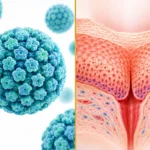
Oral HPV infection can be transmitted through kissing, but the risk is not equal for all types of kissing, and it is considerably lower than the risk from oral sex or genital contact. The question of whether HPV can be transmitted by kissing comes up often, and the honest answer is: deep, open-mouth kissing carries a measurable, independent risk; a brief closed-mouth kiss does not appear to.
That distinction matters, because most people asking this question are either worried about a recent exposure or trying to understand how they may have acquired an oral HPV infection in the first place.
Key Takeaways
- Deep (open-mouth) kissing is independently associated with oral HPV infection, even when controlling for oral sex history.
- Brief, closed-mouth kissing is considered very unlikely to transmit HPV.
- HPV does not spread through saliva alone, mucosal contact is the mechanism.
- High-risk oral HPV types (16, 18) are relatively uncommon, and most oral HPV infections clear on their own.
- Vaccination before first sexual or intimate contact is the most effective prevention.
How HPV Spreads, and Where Kissing Fits In
HPV is primarily a skin-to-skin and mucosal-contact virus. It does not travel through the air, survive meaningfully on surfaces, or spread through saliva sitting in a cup. The full picture of how HPV spreads covers all transmission routes in detail, but the short version is this: the virus needs direct mucosal or epithelial contact to pass between people.
That is why genital-to-genital and oral-to-genital contact are the dominant transmission routes. The oral cavity, particularly the tonsils and the oropharynx, contains the same type of mucosal tissue that HPV targets elsewhere in the body. Open-mouth kissing brings two mucosal surfaces into prolonged, direct contact. That is the biological basis for why deep kissing can, in some cases, transmit the virus.
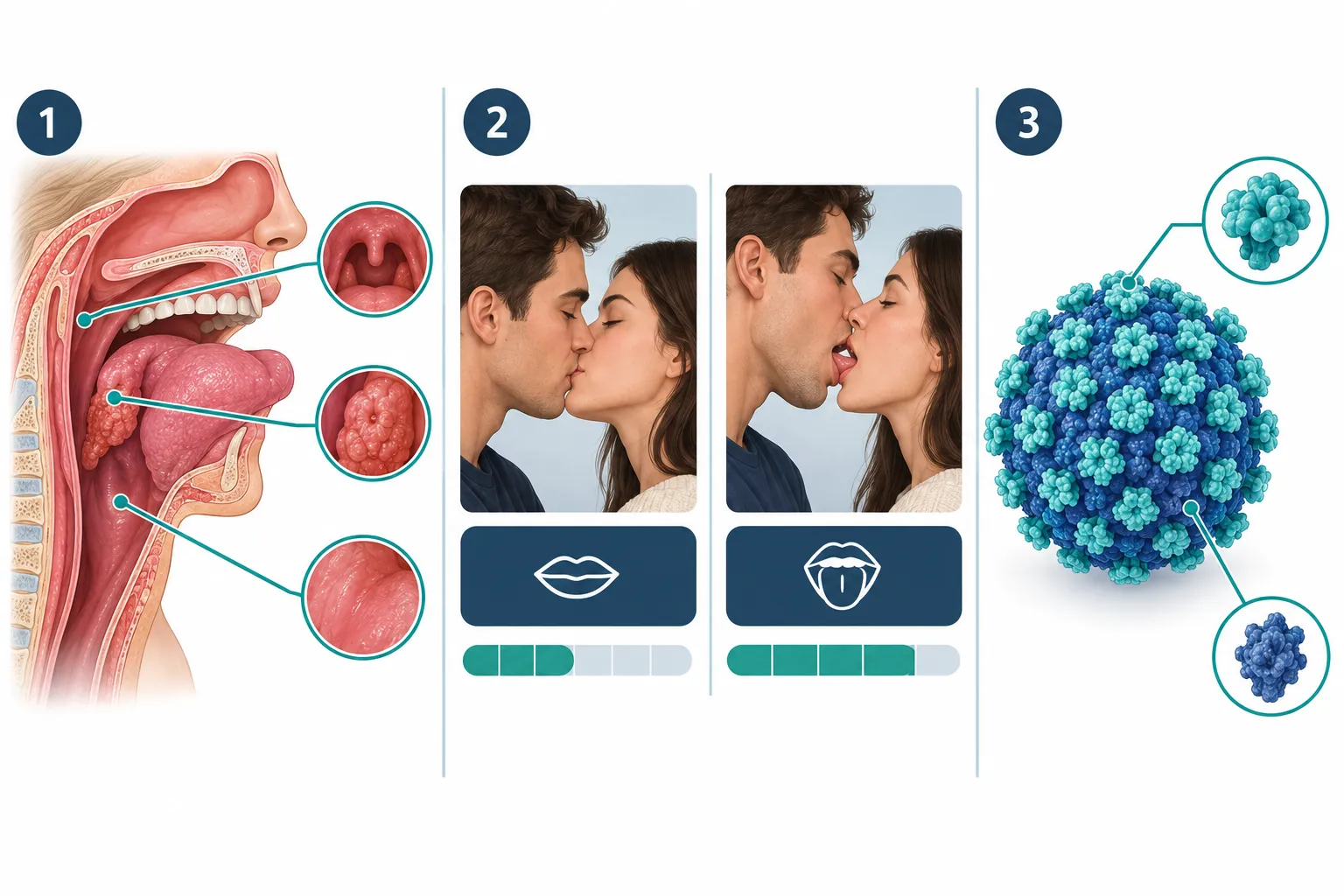
Closed-mouth kissing does not create that same mucosal-to-mucosal exposure. The evidence consistently describes it as very unlikely to transmit HPV, not impossible in theory, but not a documented route of spread in practice.
What “oral HPV” actually means
Oral HPV refers to HPV infection of the mouth and throat, including the tonsils and the back of the throat (oropharynx). Most oral HPV infections produce no symptoms and clear on their own within one to two years. A small subset, predominantly caused by HPV type 16, can persist and, over many years, contribute to oropharyngeal cancer. Understanding how HPV types differ by risk level helps put that in context: most types that circulate in the oral cavity are low-risk or clear before causing lasting damage.
Can HPV be Transmitted by Kissing? What Studies Show
The research here is more specific than most people expect.
Several epidemiologic studies have found that open-mouth (French) kissing is independently associated with oral HPV infection, meaning the association holds even after accounting for oral sex and vaginal sex history. In one longitudinal cohort, the incidence of new oral HPV infections was approximately 5.67 per 1,000 person-months. Having five or more lifetime open-mouth kissing partners was associated with roughly four times higher odds of prevalent oral HPV infection, an odds ratio similar to that seen with five or more oral sex partners.
A separate analysis found that among men who reported never having oral sex, having ten or more lifetime open-mouth kissing partners was still significantly associated with higher oral HPV prevalence. That finding is notable because it isolates kissing as a transmission route independent of oral-genital contact.
Another study found that open-mouth kissing with a new partner in the previous three months was associated with approximately 2.6 times higher odds of acquiring a new oral HPV infection.
What the studies do not show is a definitive causal link, epidemiology establishes association, not certainty. Researchers also note that quantifying the exact per-contact transmission risk from kissing is not yet possible. The current scientific consensus is that kissing can transmit HPV, that open-mouth kissing carries more risk than closed-mouth kissing, and that the risk is lower than that from oral sex.
Does the type of HPV matter for kissing transmission?
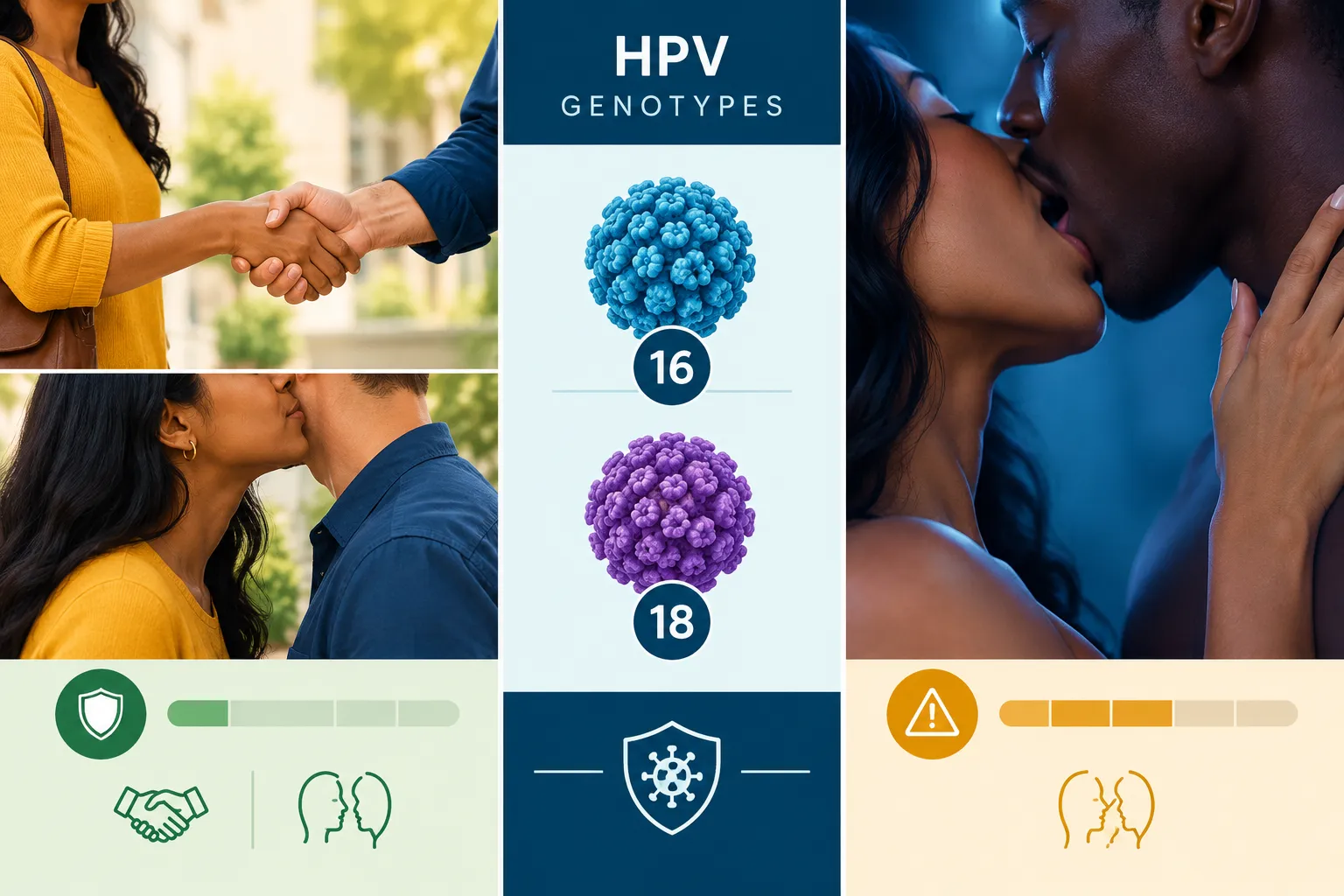
Yes. The same high-risk types found in genital infections, primarily HPV 16 and HPV 18, are the types implicated in oropharyngeal cancer. These types can be transmitted orally. However, high-risk oral HPV infection remains relatively uncommon in the general population, and progression from infection to cancer is infrequent and takes many years. Most oral HPV infections, including those caused by high-risk types, resolve without intervention. The connection between HPV and cancer explains the progression pathway and what monitoring looks like when an infection does persist.
Who Is at Higher Risk for Oral HPV Infection?
A few groups face meaningfully higher odds of acquiring oral HPV:
- People with multiple open-mouth kissing or oral sex partners, the evidence is consistent that higher partner counts increase oral HPV prevalence.
- Unvaccinated individuals, HPV vaccination protects against the types most likely to cause oropharyngeal cancer; those who have not been vaccinated have no immune protection against HPV 16 and 18.
- Immunocompromised individuals, people living with HIV, organ transplant recipients, or others on immunosuppressive therapy are less able to clear HPV infections, raising the risk that an oral infection persists.
- Smokers, tobacco use is associated with impaired mucosal immune response, which may reduce the ability to clear oral HPV.
What Oral HPV Symptoms Look Like, and Why Most People Have None
Most people with oral HPV infection have no symptoms at all. The virus infects mucosal cells silently, and the immune system clears it without any sign that infection occurred.
When symptoms do appear, they are generally associated with either low-risk HPV types (which can cause oral warts or papillomas) or with the later stages of HPV-related oropharyngeal disease. HPV symptoms across the body follow the same pattern: the majority of infections are asymptomatic, and symptoms that do appear often resolve on their own.
There is no routine screening test for oral HPV in the way cervical screening exists for cervical HPV. If you have a persistent sore throat, hoarseness, difficulty swallowing, or a lump in the neck that does not resolve within a few weeks, those are reasons to see a doctor, not because they are likely to be HPV-related, but because any persistent symptom in that area warrants evaluation.
Does the HPV Vaccine Protect Against Oral HPV?
The HPV vaccine is designed to prevent infection with the HPV types it covers, including HPV 16 and 18, regardless of the route of exposure. That means vaccination should, in principle, reduce the risk of oral HPV infection from kissing or any other contact, not just genital exposure.
The vaccine works best before any exposure to the covered types. The HPV vaccine: how it works and who should get it covers the recommended schedule, age ranges, and evidence base. For people who are already sexually or intimately active, the vaccine may still offer partial protection against types not yet encountered.
Reducing Risk Without Overreacting
The evidence does not support avoiding open-mouth kissing as a public health recommendation. Expert commentary has been consistent on this point: the risk from kissing is real but low, and advising people to avoid it goes beyond what the data support.
What is reasonable:
- Vaccination, the most effective single step for anyone not yet vaccinated, particularly before the onset of sexual and intimate activity.
- Awareness, understanding that oral HPV exists and that most infections clear on their own removes a lot of unnecessary fear.
- Prompt evaluation of persistent symptoms, not as a panic response, but because early detection of any oral or throat abnormality makes management more straightforward.
If you have already been diagnosed with genital HPV and are wondering what that means for oral transmission, the HPV treatment overview explains how the virus is managed across different sites and what monitoring typically involves.
Frequently Asked Questions
Can you get HPV from a single kiss?
A single open-mouth kiss with someone who has oral HPV could theoretically transmit the virus, but the per-contact transmission probability is low. Most of the studies showing elevated risk involve cumulative exposure, multiple partners or repeated contact, rather than a single event. Brief closed-mouth kissing is not considered a meaningful transmission route.
If my partner has genital HPV, does that mean they have oral HPV too?
Not necessarily. HPV infections at different body sites are independent of each other. Someone with a genital HPV infection may or may not have an oral infection, and the types involved can differ. There is no test that tells you whether someone currently has an active oral HPV infection.
Is there a test for oral HPV?
There is no approved routine screening test for oral HPV in clinical use. Research studies use oral rinse or swab samples to detect HPV DNA, but this is not standard clinical practice. If you have concerns about oropharyngeal symptoms, a doctor or ENT specialist can evaluate the throat and tonsils directly.
Does using a dental dam or condom during oral sex reduce oral HPV risk?
Barrier methods during oral sex reduce, but do not eliminate, the risk of HPV transmission, because HPV can be present on skin not covered by a barrier. They are still a reasonable risk-reduction measure, particularly for people who are unvaccinated or immunocompromised.
Can children get oral HPV from kissing adults?
Oral HPV transmission to children through kissing from caregivers has been documented in case reports, though it is uncommon. HPV types 6 and 11, low-risk types, can cause a rare condition called recurrent respiratory papillomatosis in children, typically acquired perinatally rather than through kissing. Routine childhood HPV vaccination, recommended at age 11-12, addresses the high-risk types.
If I have oral HPV, should I tell partners before kissing?
There is no clinical guidance requiring disclosure of oral HPV before kissing, partly because most people never know they have it and partly because the transmission risk from kissing is low. If you have a known, active oral HPV infection, talking to your doctor about what that means for your specific situation is more useful than applying a blanket rule.