HPV is the most common sexually transmitted infection worldwide, and if you’ve recently been diagnosed or are trying to conceive, the question of whether it can affect fertility is a real and reasonable one to ask. The short answer: HPV is associated with reduced fertility in both men and women, but it is not a guaranteed cause of infertility, and the relationship is more complex than a simple yes or no.
The evidence has strengthened considerably in 2024 and 2025. Multiple systematic reviews now confirm that HPV, particularly high-risk genotypes like HPV 16 and HPV 18, can interfere with sperm quality, embryo development, and implantation. That doesn’t mean an HPV diagnosis ends your chances of having children. It means this is worth discussing with your doctor.
Key Takeaways
- HPV has been linked to reduced sperm quality, including lower motility, higher DNA fragmentation, and abnormal morphology in men.
- In women, high-risk HPV types are associated with a modestly increased risk of fertility complications, though the mechanism is still being studied.
- HPV in semen is associated with poorer outcomes in assisted reproduction, including IVF.
- Most HPV infections clear on their own, but active infection during a conception attempt may matter.
- Vaccination and screening are the most effective tools for reducing HPV’s reproductive impact.
How HPV Affects Male Fertility
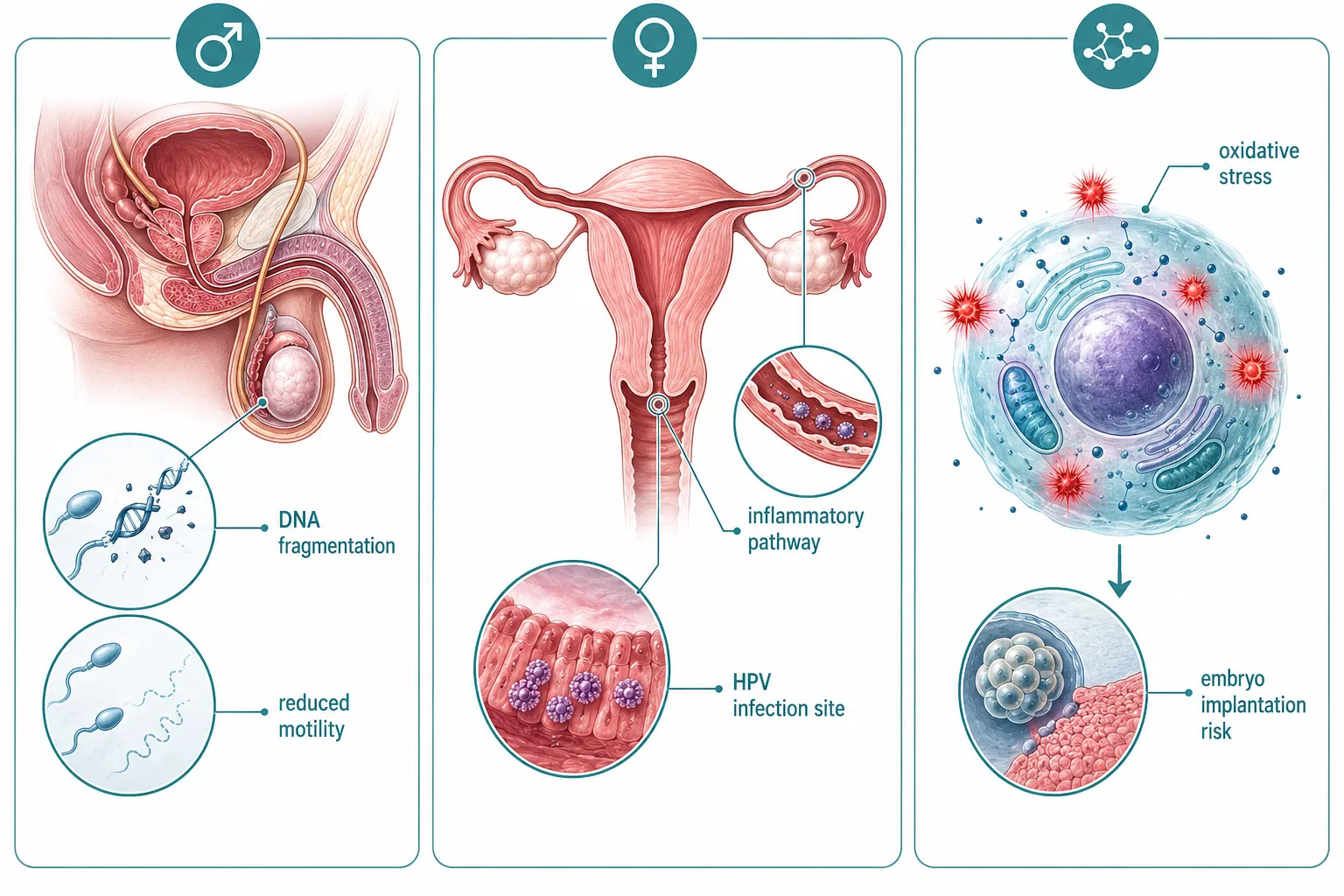
HPV doesn’t just affect the cervix. Research published in 2024 and 2025 consistently shows that HPV infection in men, including in semen, has measurable effects on sperm quality across several key parameters.
Sperm from men with HPV in their semen show higher rates of DNA fragmentation. That matters because fragmented sperm DNA is linked to lower fertilization rates, higher rates of early miscarriage, and poorer embryo development. Beyond DNA damage, HPV-positive semen samples tend to show reduced sperm motility (the ability to swim effectively), lower sperm concentration, and a higher proportion of abnormal morphology compared to HPV-negative samples.
The mechanism appears to involve oxidative stress, HPV infection triggers an inflammatory response in the male reproductive tract that generates reactive oxygen species, which in turn damage sperm cells. A 2025 systematic review on HPV and male infertility found that men with detectable HPV in semen had significantly higher odds of being classified as subfertile compared to men without HPV.
HPV can also bind directly to the sperm head, which may interfere with the sperm’s ability to penetrate an egg, a separate mechanism from DNA fragmentation, and one that is still being studied.
For men trying to conceive, understanding how HPV spreads between partners is part of the picture, because active infection in either partner can affect reproductive outcomes.
Does HPV in Semen Affect IVF Success?
Yes, the data here is fairly consistent. Studies examining HPV-positive semen in assisted reproduction, including IVF and intrauterine insemination, show lower fertilization rates, reduced embryo quality, and lower live birth rates compared to HPV-negative samples. Some fertility clinics now offer sperm washing techniques designed to reduce HPV viral load in semen before use in ART procedures, though the evidence on how much this improves outcomes is still accumulating.
Can HPV Cause Infertility in Women?
The picture in women is more complicated, and the evidence is less direct, but it’s not reassuring either.
High-risk HPV types, particularly HPV 16 and HPV 18, have been identified in the endometrium (the lining of the uterus) and fallopian tubes, not just the cervix. A 2025 integrative review found that women with persistent high-risk HPV infection had a modestly elevated risk of fertility complications, including implantation failure during IVF cycles. The proposed mechanisms include HPV-induced inflammation in the endometrium, which may reduce the receptivity of the uterine lining to an embryo, and direct effects on the egg itself.
It’s important to be precise here: high-risk HPV is a risk factor associated with certain fertility complications, it is not a proven direct cause of infertility in the way that blocked fallopian tubes or severe endometriosis are. The current expert consensus is that the association is real and clinically relevant, but causality has not been definitively established.
What is clearer is the indirect pathway. Persistent high-risk HPV infection can lead to cervical cell changes, from LSIL to HSIL, and in some cases to cervical cancer or its precursors. Treatments for cervical dysplasia, such as LEEP (loop electrosurgical excision procedure) or cone biopsy, can affect cervical length and cervical mucus production, both of which can influence fertility and pregnancy outcomes. This is a well-documented indirect route by which HPV-related disease affects reproductive health.
If you’ve had an abnormal Pap result, the guide to abnormal Pap smear results explains what the follow-up process looks like and what cell changes actually mean.
Who Is at Higher Risk for HPV-Related Fertility Complications?
Some groups face a meaningfully higher risk of HPV affecting their reproductive health:
- People with persistent high-risk HPV infection, those who don’t clear the virus within one to two years, particularly with genotypes 16 or 18, face greater risk of cervical changes and endometrial involvement.
- Immunocompromised individuals, people living with HIV, organ transplant recipients, or others on immunosuppressive therapy are less able to clear HPV naturally, making persistent infection and its downstream effects more likely.
- Unvaccinated individuals, those who have not received the HPV vaccine remain susceptible to the high-risk genotypes most strongly linked to both cancer and fertility complications.
- People with a history of abnormal Pap results or cervical procedures, prior LEEP or cone biopsy affects cervical tissue in ways that can influence fertility, particularly in subsequent pregnancies.
What Does This Mean If You’re Trying to Conceive?
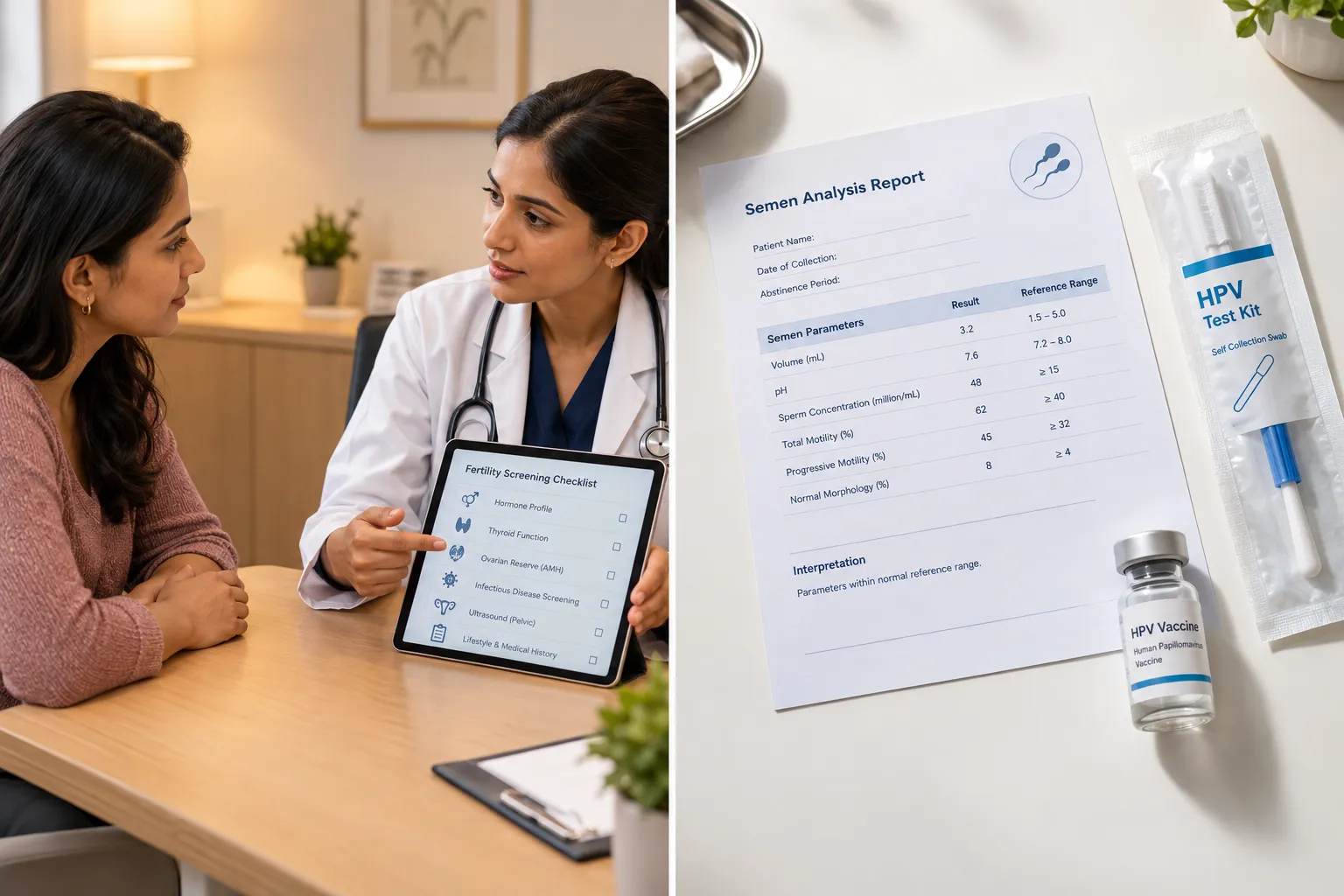
Having HPV doesn’t mean you can’t conceive. Most people with HPV, including those with high-risk types, do conceive successfully. The research identifies associations and elevated risk, not certainty.
That said, there are practical steps worth discussing with your doctor if you have a known HPV infection and are trying to get pregnant.
For men, semen analysis with HPV testing is available at some fertility clinics and can give a clearer picture of whether viral load in semen is a factor. Sperm washing before IVF or IUI may be worth discussing if HPV is detected. Some research suggests that AHCC, a mushroom-derived supplement, has shown preliminary evidence for supporting HPV clearance, though this is not yet standard clinical practice.
For women, if you have a current high-risk HPV infection with associated cervical changes, your gynecologist may recommend completing treatment before attempting conception, not because HPV itself makes pregnancy impossible, but because treating dysplasia before pregnancy simplifies management considerably.
Vaccination before exposure remains the most effective preventive measure. The HPV vaccine does not treat an existing infection, but it protects against the genotypes not yet acquired. The full guide to the HPV vaccine covers who should receive it and when.
For broader context on how HPV affects health across different body systems, the HPV and cancer overview covers the cancer-related risks that sometimes run parallel to fertility concerns.
What the 2024-2025 Research Actually Concludes
The overall trend in recent literature is clear: HPV’s reproductive impact is real, measurable, and broader than previously recognized. The 2025 systematic review on male infertility found statistically significant associations between HPV in semen and subfertility. The integrative review across the reproductive lifespan confirmed that both male and female fertility can be affected, through different but overlapping mechanisms, oxidative stress, DNA damage, inflammatory endometrial changes, and direct effects on gametes.
What the research does not yet support is a simple causal claim: “HPV causes infertility.” The evidence shows elevated risk and association. It shows that active HPV infection during a conception attempt, in either partner, may reduce the odds of success, particularly in assisted reproduction. It does not show that HPV infection inevitably leads to infertility.
The clinical implication is straightforward: if you have HPV and are planning a pregnancy, this is worth raising with your doctor. Not because the outcome is predetermined, but because knowing the status of the infection, and managing it appropriately, gives you the best available information going into the process.
HPV testing options and how results are interpreted are a useful starting point if you haven’t had recent testing.
Frequently Asked Questions
Can HPV clear on its own before it affects fertility?
Yes. Most HPV infections, including high-risk types, clear on their own within one to two years as the immune system responds. If the infection clears before causing persistent cervical changes or sustained sperm DNA damage, the fertility impact may be minimal. The concern is with infections that persist, particularly in people with reduced immune function.
Does HPV affect both partners’ fertility equally?
Not equally. The evidence for HPV’s impact on male fertility, specifically sperm DNA fragmentation, motility, and IVF outcomes, is currently stronger and more consistent than the evidence for direct female fertility effects. In women, the more established risk comes from cervical treatments for HPV-related dysplasia rather than from the virus itself directly impairing conception.
If I’ve had a LEEP procedure for cervical dysplasia, does that affect my fertility?
LEEP can affect cervical length and cervical mucus, both of which play a role in fertility and in carrying a pregnancy to term. The risk is generally low after a single procedure, but it’s worth discussing with your gynecologist before trying to conceive, particularly if you’ve had more than one excisional procedure.
Should both partners get tested for HPV before trying to conceive?
Routine HPV testing is currently recommended for women as part of cervical screening, but there is no standard HPV test approved for men in most countries. If male-factor infertility is a concern, a fertility specialist can discuss semen HPV testing as part of a broader semen analysis. How HPV is transmitted between partners is also worth understanding as part of that conversation.
Does the HPV vaccine improve fertility outcomes?
The vaccine protects against the high-risk genotypes most strongly linked to cervical disease and the fertility complications that follow from it. It doesn’t treat an existing infection or reverse existing cervical changes. For people who haven’t yet been exposed to HPV 16, 18, and other covered types, vaccination reduces the risk of the persistent infections that are most associated with reproductive complications.