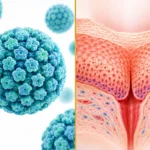
HPV does cause cancer, that is the established scientific consensus, not a theory. Roughly 70% of all cervical cancers worldwide are caused by just two HPV types: HPV 16 and HPV 18. And having HPV does not mean you will get cancer. Most infections, including high-risk types, clear on their own within one to two years without causing any lasting harm.
That gap between “HPV causes cancer” and “you will get cancer” is where most of the fear lives, and where the evidence is most useful.
Key Takeaways
- High-risk HPV types, especially HPV 16 and 18, are the direct cause of most cervical cancers and a significant portion of throat, anal, penile, vulvar, and vaginal cancers.
- Nearly all cervical cancers, over 99%, are linked to persistent HPV infection, making cervical cancer one of the most preventable cancers that exists.
- Most HPV infections clear on their own; cancer develops only when a high-risk infection persists for years and goes undetected or untreated.
- Regular screening (Pap tests and HPV-based tests) catches cell changes before they become cancer, that is exactly what screening is designed to do.
- HPV vaccination prevents infection with the types most responsible for HPV-related cancers, and the evidence for its effectiveness continues to strengthen.
How Does HPV Actually Cause Cancer?
HPV is a DNA virus. When a high-risk type infects cells, most often in the cervix, throat, anus, or genitals, it inserts its genetic material into the host cell’s DNA. Two viral proteins, E6 and E7, then interfere with the cell’s normal tumor-suppressor mechanisms. The proteins essentially disable the brakes that stop damaged cells from multiplying.
In most people, the immune system identifies and clears the infection before this process goes far. The problem arises when a high-risk infection persists, typically over a period of ten to fifteen years, and the cellular changes it triggers accumulate without detection or treatment.
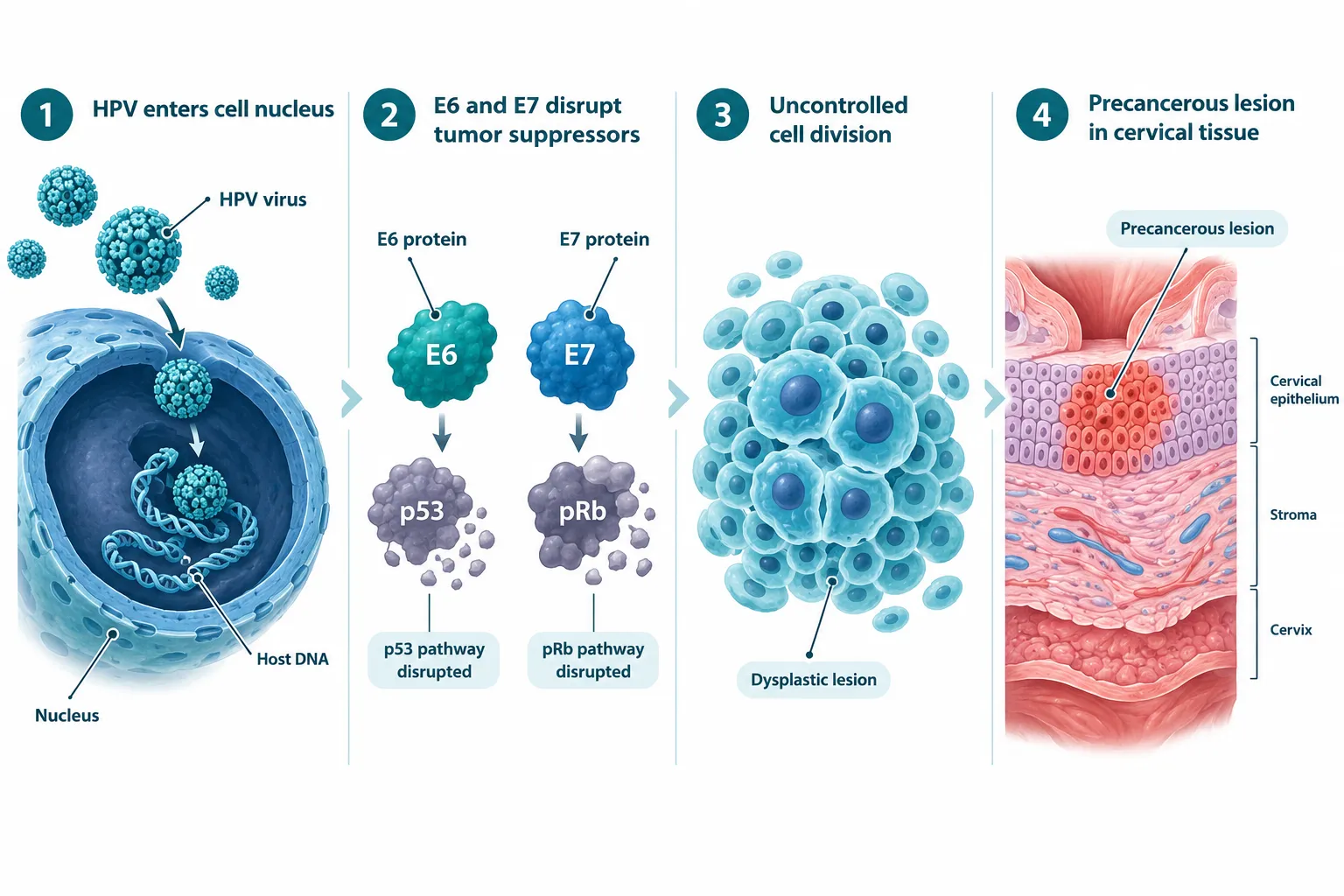
Those cellular changes follow a progression: normal cells become mildly abnormal (low-grade dysplasia), then more severely abnormal (high-grade dysplasia, classified on a Pap result as HSIL), and in some cases, eventually invasive cancer. At each stage before the final one, the changes are detectable and treatable. That progression, and the fact that it takes years, is why screening works.
Not all HPV types carry this risk. The virus is divided into low-risk and high-risk categories. Low-risk types like HPV 6 and 11 cause genital warts but are not associated with cancer. You can read more about how HPV can cause genital warts and cervical cancer differently depending on the type involved.
Which Cancers Are Linked to HPV?
The full picture of HPV and cancer covers more cancer types than most people expect. Cervical cancer gets the most attention, and rightly so, since over 99% of cases are caused by HPV, but it is far from the only one.
| Cancer Type | Estimated HPV Contribution |
|---|---|
| Cervical | Over 99% |
| Anal | Approximately 90% |
| Oropharyngeal (throat) | Approximately 70% |
| Vaginal | Approximately 75% |
| Vulvar | Approximately 70% |
| Penile | Approximately 60% |
Oropharyngeal cancer, cancer of the back of the throat, base of the tongue, and tonsils, is now the most common HPV-related cancer in the United States, surpassing cervical cancer in annual case counts. That shift reflects both improved cervical screening and a genuine rise in throat cancers linked to HPV 16 specifically.
HPV causes cancer in men as well as women. Anal cancer, penile cancer, and oropharyngeal cancer all affect men, and HPV 16 is the dominant driver across all three.
Who Is at Higher Risk for HPV-Related Cancer?
Having HPV does not put everyone at equal risk of cancer. Several factors raise the likelihood that an infection will persist and progress rather than clear.
- People with weakened immune systems, including those living with HIV and organ transplant recipients on immunosuppressive therapy, have a significantly harder time clearing HPV and face higher rates of high-grade dysplasia and cancer.
- Smokers, tobacco use impairs local immune response in cervical tissue and is independently associated with higher rates of cervical cancer in people with HPV.
- People with a history of abnormal Pap results, prior LSIL or HSIL findings indicate the virus has already begun affecting cells, and ongoing monitoring is essential.
- Unvaccinated people, those who did not receive the HPV vaccine before exposure to high-risk types have no immune protection against HPV 16 and 18.
Does HPV Always Lead to Cancer?
No. The path from HPV infection to cancer requires a specific, prolonged sequence of events that most infections never complete.
The immune system clears most HPV infections, including high-risk types, within one to two years. Even when a high-risk infection does persist, it typically takes a decade or more for precancerous changes to develop, and another period of time beyond that for invasive cancer to form. That long window is why regular screening is so effective: cell changes are easiest to treat before they progress.
What makes an infection more likely to persist is not fully understood, but immune status, smoking, and viral type all matter. HPV 16 carries a higher risk of persistence and cancer than most other high-risk types. For a deeper look at whether cervical cancer can occur without HPV involvement, the article on getting cervical cancer without HPV addresses that question directly.
How Screening Catches Cancer Before It Starts
A Pap test (cervical smear) looks for abnormal cells. An HPV-based test looks for the presence of high-risk HPV types. Used together, a strategy called co-testing, they provide the most complete picture of cervical cancer risk.
Results are graded: ASC-US (mildly abnormal cells, cause unclear), LSIL (low-grade changes), and HSIL (high-grade changes that need prompt evaluation). HSIL typically leads to colposcopy, a closer examination of the cervix, and possibly a biopsy.

The 2026 WHO guidelines now recommend HPV-based testing as the primary screening method over cytology alone, reflecting evidence that HPV testing catches more precancerous changes earlier. For people who have been diagnosed with high-risk HPV, understanding how HPV spreads and how it doesn’t is often the next practical question.
Can the HPV Vaccine Prevent Cancer?
Yes, and the evidence for this is now substantial. The HPV vaccine targets the types most responsible for cancer: HPV 16 and 18 are included in all approved formulations, and the nine-valent version (Gardasil 9) also covers HPV 31, 33, 45, 52, and 58, which together account for an additional 15% of cervical cancers.
Vaccination before exposure to HPV is most effective, which is why it is recommended in early adolescence. However, catch-up vaccination is recommended through age 26, and shared clinical decision-making applies for adults aged 27 to 45. A single-dose strategy is now supported by evidence in some populations, reflecting 2026 updates to vaccination guidance.
Countries with high vaccination coverage are already seeing measurable reductions in cervical cancer rates. Scotland, Australia, and several Scandinavian countries have reported dramatic declines in high-grade cervical abnormalities in vaccinated cohorts.
Some people also ask about supplements like AHCC alongside conventional care. The evidence there is more limited, the AHCC and cervical cancer overview covers what the research does and does not support.
Frequently Asked Questions
If I tested positive for high-risk HPV, what happens next?
A positive high-risk HPV test means the virus is present, it does not mean you have cancer or precancerous changes. Your doctor will typically recommend either a Pap test, a colposcopy, or a follow-up HPV test in 12 months, depending on your age and history. The goal is to monitor whether the infection clears or whether any cell changes develop.
Can men be tested for HPV-related cancer risk?
There is currently no approved screening test for HPV in men equivalent to the cervical Pap test. Anal Pap tests are used in some high-risk groups, including men who have sex with men and people living with HIV. For other HPV-related cancers in men, penile and oropharyngeal, there is no routine screening protocol, which makes vaccination the primary prevention tool.
How long does it take for HPV to cause cancer?
The progression from initial HPV infection to invasive cancer typically spans ten to twenty years, though this varies. High-grade dysplasia can develop in a shorter timeframe, particularly in immunocompromised people. That long natural history is precisely why regular screening can interrupt the process at a treatable stage.
Does treating genital warts reduce cancer risk?
Genital warts are caused by low-risk HPV types, primarily HPV 6 and 11, which are not associated with cancer. Treating warts addresses the warts themselves but does not affect cancer risk, which is determined by high-risk types. It is possible to carry both low-risk and high-risk HPV types simultaneously, so a wart diagnosis does not rule out high-risk infection.
Is HPV-related throat cancer increasing?
Yes. Oropharyngeal cancer linked to HPV 16 has been rising steadily in the United States and several other high-income countries. It now accounts for the majority of new HPV-related cancer diagnoses annually. The rise is attributed to changing sexual behaviors over recent decades, and the trend is expected to slow as vaccinated cohorts age into the higher-risk decades.
What to Do With This Information
Does HPV cause cancer? Yes, but the mechanism requires a specific type, a persistent infection, years of progression, and a gap in screening or treatment. Every one of those steps is a point where the outcome can change.
If you have a high-risk HPV result, the next step is not panic, it is a conversation with your doctor about what monitoring schedule fits your situation. If you have never been vaccinated and are within the recommended age range, vaccination is still worth discussing. If you are due for cervical screening, schedule it. Cell changes are easiest to treat before they progress, that is the entire logic behind the screening system that exists.
For a broader look at the cancers HPV is linked to and how each one develops, the HPV and cancer resource section covers each cancer type in more depth.