
The Aptima HPV test detects high-risk HPV strains at the RNA level, meaning it identifies active viral activity, not just the presence of HPV DNA. A positive result doesn’t mean you have cervical cancer. It means a strain worth monitoring has been found, and that’s exactly what cervical screening is designed to catch early.
Key Takeaways
- The Aptima HPV test targets mRNA from 14 high-risk HPV genotypes, including types 16 and 18, which together account for roughly 70% of cervical cancers.
- It was approved in the US as a primary cervical cancer screening tool in February 2026, meaning it can now be used alone, without a simultaneous Pap smear.
- The test is performed using the same cervical sample collected during a routine pelvic exam.
- A positive result triggers follow-up, not panic, the next step is typically a colposcopy or genotyping, not immediate treatment.
- A real-world study of over 650,000 patients confirmed the test’s accuracy is comparable to, and in some cases better than, DNA-based HPV tests for identifying who actually needs further evaluation.
What the Aptima HPV Test Actually Measures
Most HPV tests look for viral DNA, the genetic material of the virus itself. The Aptima HPV test works differently. It uses a technology called transcription-mediated amplification (TMA) to detect E6 and E7 mRNA, the messenger RNA that high-risk HPV strains produce when they are actively trying to alter cervical cells.
That distinction matters. HPV DNA can be present in cells that are simply carrying the virus without causing damage. HPV mRNA signals that the virus is actively expressing the proteins most linked to cell changes that can progress toward dysplasia or, over time, cervical cancer.
The test screens for 14 high-risk HPV genotypes. Among those, it specifically identifies HPV 16 and HPV 18 separately, the two types responsible for the majority of cervical cancer cases. This genotype-specific reporting helps clinicians decide how urgently follow-up is needed. A result positive for HPV 16 or 18 carries a different clinical weight than a result positive for one of the other 12 high-risk types.
For a broader look at how HPV types are categorized and what the numbers mean, the HPV types guide on HPVGuide.org covers the full spectrum of low-risk and high-risk strains.
What to Expect During the Aptima HPV Test Visit
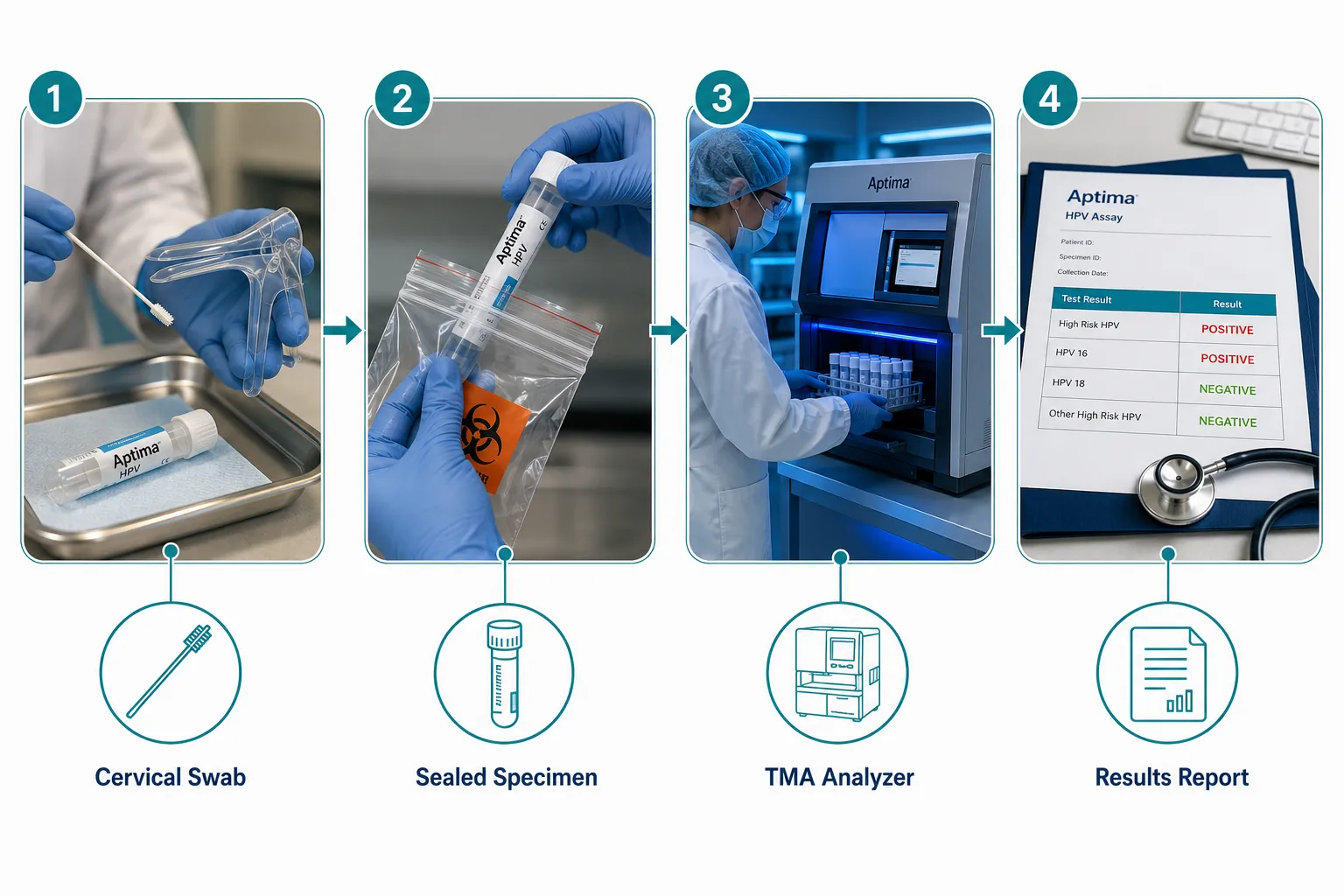
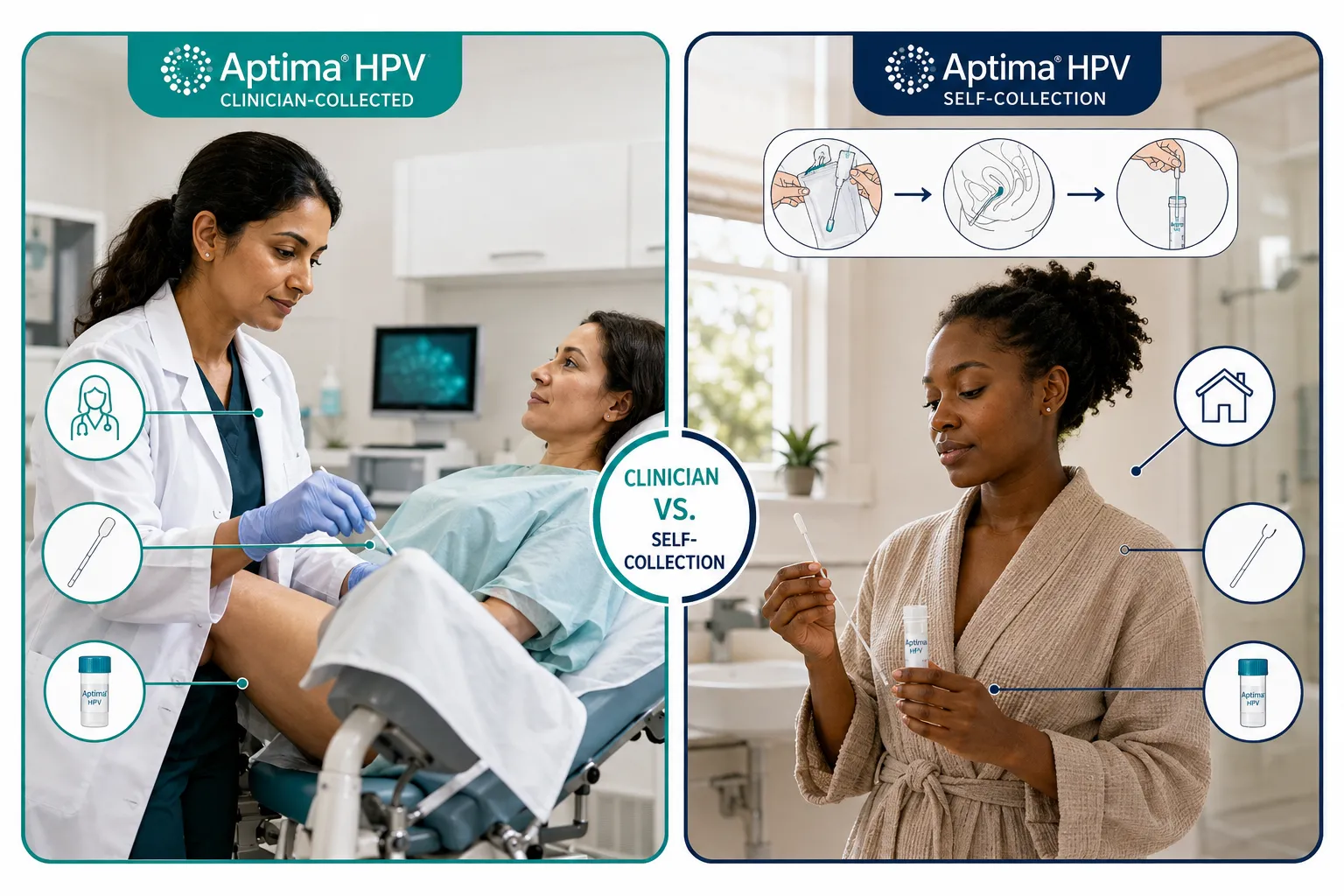
The visit itself is brief and identical to a standard cervical screening appointment. A clinician, usually a gynecologist, nurse practitioner, or OB-GYN, performs a speculum exam and collects a small sample of cells from the cervix using a soft brush or swab. The sample goes into a liquid-based collection vial, the same type used for liquid-based cytology (Pap smear). In most cases, if a co-test is ordered, both the Aptima HPV test and a Pap smear are processed from that single sample.
The collection takes under a minute. Most people describe mild pressure or brief discomfort, similar to a Pap smear. Light spotting afterward is normal and typically resolves within a day.
The sample is then sealed, labeled, and sent to a certified laboratory. In the lab, the TMA process amplifies any HPV mRNA present in the sample to detectable levels. Turnaround time varies by lab and location, but results are generally available within 3 to 7 business days. Your clinician’s office or patient portal will notify you when results are ready.
What to do before the appointment: Avoid scheduling the test during your period if possible, and skip vaginal intercourse, douching, or inserting anything vaginally for 24 hours beforehand. These steps help ensure the sample quality is optimal.
The HPV testing overview at HPVGuide.org explains how different cervical screening tests are used together and how results are read across testing methods.
Self-Collection: A 2026 Update Worth Knowing
As of mid-2026, regulatory bodies in the EU and UK have approved self-collection options for Aptima-compatible HPV tests. This means that in those regions, you may be offered a vaginal self-swab, collected in a private space such as a bathroom, rather than a clinician-collected cervical sample.
Self-collection uses a similar swab and the same TMA analysis. Studies show sensitivity for detecting high-risk HPV is slightly lower with vaginal self-collection compared to clinician-collected cervical samples, but the difference is modest and the public health benefit, reaching people who avoid clinic-based screening, is considered significant.
In the US as of 2026, self-collection for the Aptima HPV test is not yet standard practice in most clinical settings, though research trials are ongoing. If you’re in the UK or EU, ask your provider whether self-collection is available at your screening site.
Who’s at Higher Risk for High-Risk HPV
Certain groups are more likely to have a persistent high-risk HPV infection, the kind that warrants closer monitoring:
- People who are immunocompromised, including those living with HIV or who have received an organ transplant, are less likely to clear HPV naturally and more likely to develop dysplasia.
- People with a history of abnormal Pap results or prior LSIL/HSIL findings have a higher baseline risk of ongoing or progressive cell changes.
- Unvaccinated adults who did not receive the HPV vaccine series have no immunity to the high-risk types the vaccine covers, including HPV 16 and 18.
- Smokers have a measurably higher risk of persistent HPV infection and cervical dysplasia progression, likely due to the effect of tobacco on local immune response in cervical tissue.
How Aptima HPV Test Results Are Reported
Results come back in one of three formats depending on what was ordered:
| Result Type | What It Means |
|---|---|
| Negative | No mRNA from the 14 high-risk HPV types detected |
| Positive (not 16/18) | High-risk HPV detected; genotype is one of the other 12 types |
| Positive (16 and/or 18) | High-risk HPV 16 or 18 specifically identified |
A negative result is reassuring. It means no active high-risk HPV expression was found in the sample at the time of testing. Depending on your age and screening history, your next test may not be needed for 3 to 5 years.
A positive result for types other than 16 or 18 typically leads to a reflex Pap smear (if one wasn’t already done) or a repeat co-test in 12 months. A positive result for HPV 16 or 18 generally leads directly to colposcopy, a closer examination of the cervix, because those types carry the highest cancer risk.
Cell changes are easiest to treat before they progress, and that’s exactly what this follow-up pathway is designed to do. If your result is positive, the guide to what happens after an abnormal Pap smear walks through what colposcopy involves and what the possible outcomes are.
Where the Aptima HPV Test Fits in Your Screening Plan
The February 2026 US approval of the Aptima HPV test as a primary screening tool means it can now be used as a standalone test, not just alongside a Pap smear. This is a meaningful shift. Primary HPV testing has been shown to detect precancerous changes earlier than cytology alone, and the Aptima test’s mRNA-based approach adds a layer of specificity that reduces unnecessary follow-up for transient infections.
Current US screening guidelines for average-risk adults with a cervix generally recommend:
- Ages 21-29: Pap smear every 3 years (HPV testing is not routinely recommended in this age group)
- Ages 30-65: HPV test alone every 5 years, co-testing (HPV + Pap) every 5 years, or Pap smear alone every 3 years
- Over 65: Screening may be discontinued if prior results have been consistently normal, discuss with your provider
The Aptima HPV test fits into the “HPV test alone” option for ages 30-65. If you’re unsure which approach is right for your situation, that’s a direct question for your clinician, screening intervals can change based on prior results, immune status, and personal history.
For context on how HPV affects cervical health specifically, the HPV in women guide covers symptoms, screening timelines, and what a positive result means for long-term cervical health.
A Note on the March 2026 Recall
In March 2026, Hologic, the manufacturer of the Aptima HPV test, issued a limited recall affecting specific lot numbers of the assay reagent used in the test. The recall was related to a potential for false-negative results in a narrow subset of samples. Affected labs were notified directly, and retesting was recommended for samples processed with the flagged lots.
If your Aptima HPV test was performed in early 2026, ask your provider whether your sample was processed using a recalled lot. Most patients were unaffected, but it’s a reasonable question to raise at your next appointment.
Frequently Asked Questions
Is the Aptima HPV test the same as a Pap smear?
No. A Pap smear examines cervical cells under a microscope for abnormal changes. The Aptima HPV test detects mRNA from high-risk HPV types in those same cells. They use the same sample but answer different questions, one looks at the cells themselves, the other looks for viral activity. They are often ordered together as a co-test.
Can the Aptima HPV test tell me how long I’ve had HPV?
No. The test detects active HPV mRNA at the time of the sample, it can’t determine when the infection began. HPV can remain dormant for years before becoming detectable, which means a positive result now doesn’t indicate when or from whom the infection was acquired.
What if my Aptima HPV test is positive but my Pap smear is normal?
This combination, positive HPV, normal Pap, is common and doesn’t mean something has been missed. The standard approach is either a repeat co-test in 12 months or, for HPV 16/18 specifically, a referral for colposcopy. A normal Pap with a positive HPV result means no cell changes are visible yet, but the presence of high-risk HPV warrants monitoring. The abnormal Pap smear guide covers how these results are interpreted together.
Does a positive result mean I need treatment right away?
Not necessarily. A positive Aptima HPV test result leads to further evaluation, colposcopy, a repeat test, or genotype-specific follow-up, not immediate treatment. Treatment is only recommended if a biopsy confirms significant cell changes (HSIL or higher). Many people with positive HPV results clear the infection on their own within 1 to 2 years.
Is the Aptima HPV test available for men?
The Aptima HPV test is currently approved and used for cervical cancer screening in people with a cervix. It is not a standard screening tool for HPV in men. The HPV in men guide covers what testing options exist and what HPV means for male health.
Can I request the Aptima HPV test specifically, or does my doctor decide?
You can ask your provider about it, and it’s a reasonable question. In the US, the choice between Aptima and other HPV tests (such as cobas or Digene) is often made at the lab or clinic level based on the testing platform they use. What matters most is that you’re receiving an FDA-approved high-risk HPV test as part of your regular cervical screening schedule.