
Hand warts are caused by HPV, specifically low-risk types like HPV 2 and HPV 4, and most clear on their own once your immune system recognizes and responds to the infection. AHCC, a mushroom-derived supplement studied for its immune-modulating effects, has generated real clinical interest around HPV. But asking whether AHCC can help clear hand warts specifically is a question the research hasn’t answered yet.
That gap matters. There is genuine evidence that AHCC influences immune activity relevant to HPV. There is no clinical trial, case series, or controlled study testing it against cutaneous warts on the hands.
Here’s what the evidence actually shows, and what that means for you.
Key Takeaways
- AHCC has been studied for high-risk HPV clearance, not for common hand warts caused by low-risk HPV types.
- The most relevant clinical trial (Smith et al., 2022) showed HPV clearance in a double-blind phase II study, but the participants had cervical high-risk HPV, not cutaneous warts.
- Hand warts caused by HPV 2 and HPV 4 often resolve without treatment as immune function improves over months to years.
- Proven first-line treatments for hand warts, salicylic acid and cryotherapy, have decades of clinical evidence behind them.
- AHCC appears generally safe at studied doses, but adding it specifically to treat hand warts is getting ahead of what the data supports.
What Hand Warts Are and Why the HPV Type Matters
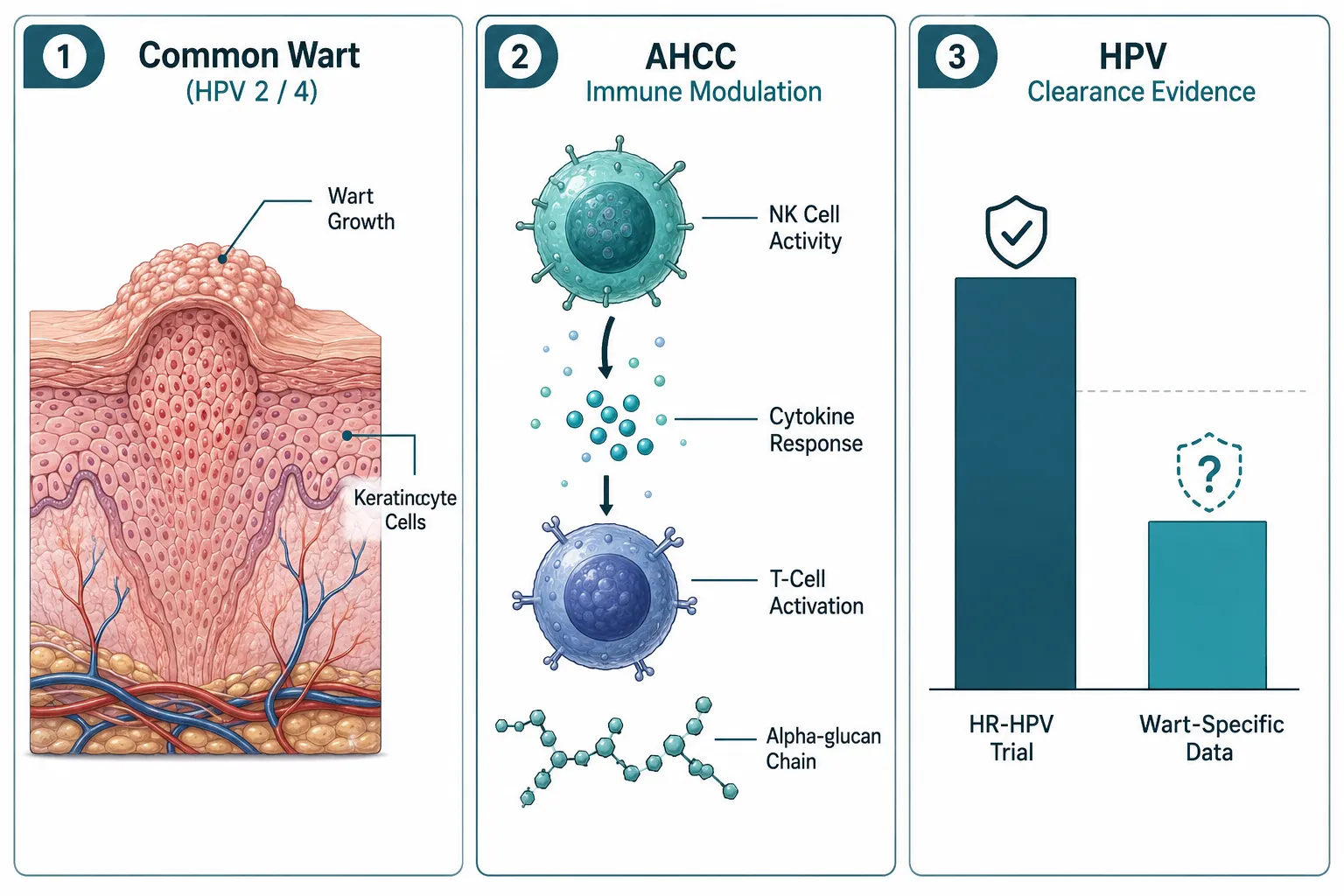
Common warts on the hands are almost always caused by low-risk HPV types, predominantly HPV 2 and HPV 4, occasionally HPV 1 or HPV 7. These are entirely different genotypes from the high-risk types (HPV 16, 18, 31, 33) associated with cervical and oropharyngeal cancers, and also different from HPV 6 and 11, which cause genital warts.
The distinction matters because nearly all AHCC research on HPV has focused on high-risk cervical HPV or on immune modulation in oncology settings. The immune mechanisms involved in clearing a cutaneous wart on your finger and clearing a persistent high-risk cervical infection overlap in some ways, both require T-cell recognition and NK cell activity, but they are not identical, and evidence from one doesn’t automatically transfer to the other.
Hand warts are common. Roughly 10% of the general population has at least one at any given time, with higher rates in children and young adults. Most resolve spontaneously within two years as immune recognition develops, though some persist longer, particularly in people with reduced immune function.
What AHCC Is and What It Does to the Immune System
AHCC is a standardized extract derived from the mycelia of Lentinula edodes (shiitake mushroom), processed to produce short-chain alpha-glucans. These compounds appear to influence innate immunity, specifically increasing NK cell activity, enhancing dendritic cell function, and modulating cytokine production including interferon-gamma and interleukin-12.
That immune profile is relevant to HPV because the immune system’s ability to recognize HPV-infected cells and mount a response is central to viral clearance. Immunocompromised individuals, those with HIV, organ transplant recipients on immunosuppressants, or people receiving chemotherapy, tend to have more persistent warts and higher HPV viral loads, which is indirect evidence that immune function drives clearance.
For a broader overview of how AHCC works and what conditions it has been studied for, the AHCC, What to Know page covers the mechanism in more detail.
What the HPV Research on AHCC Actually Shows
The most cited study is a double-blind, placebo-controlled phase II trial published in 2022. It found that participants taking AHCC at 3 g/day showed significantly higher rates of HPV clearance compared to placebo, but the study population was women with persistent high-risk cervical HPV infections, not people with hand warts. That’s a meaningful distinction.
A 2024 observational multicenter study suggested that an AHCC-based supplement improved high-risk HPV clearance rates and supported lesion regression. Again, the focus was cervical high-risk HPV.
Several ongoing trials are adding to the picture. A multicenter Chinese trial (NCT04633330) is evaluating AHCC for high-risk HPV; results are not yet available as of 2026. A newer retrospective multicenter study (NCT06752083) is examining AHCC combined with vaccination. An NCI-linked phase II trial (NCT06693323) is looking at AHCC in HPV-positive head and neck cancer, adding safety and immune-modulation data in a different clinical context.
What all of these share: they involve high-risk HPV types in cervical or oropharyngeal settings. None test AHCC against cutaneous warts caused by HPV 2 or HPV 4.
The detailed breakdown of what AHCC research shows for HPV specifically is covered in AHCC for HPV: What It Is, What the Evidence Shows, and What It Doesn’t.
Who’s at Higher Risk for Persistent Hand Warts?
Most hand warts resolve on their own, but some people are more likely to have warts that persist or spread:
- Immunocompromised individuals, people with HIV, organ transplant recipients, or anyone on long-term immunosuppressive therapy often develop more numerous, treatment-resistant warts.
- Children and young adults, warts are most common before full immune memory to cutaneous HPV types develops.
- People with skin conditions causing barrier disruption, eczema or frequent hand trauma (from sports, manual work, or nail-biting) creates entry points for HPV and slows clearance.
- Unvaccinated individuals, current HPV vaccines do not cover HPV 2 or HPV 4, so vaccination status does not directly affect hand wart risk.
Can AHCC Help Clear Hand Warts? Reading the Evidence Gap Honestly
The honest answer is: we don’t know, because it hasn’t been tested.
The biological rationale is not implausible. AHCC enhances the same NK cell and T-cell pathways that the immune system uses to clear any HPV infection, including cutaneous types. If systemic immune modulation can accelerate clearance of high-risk cervical HPV, which the phase II trial suggests, it’s not unreasonable to hypothesize a similar effect on low-risk cutaneous HPV. But a hypothesis is not evidence, and hand warts caused by HPV 2 and HPV 4 have a different immunological context than persistent cervical infections.
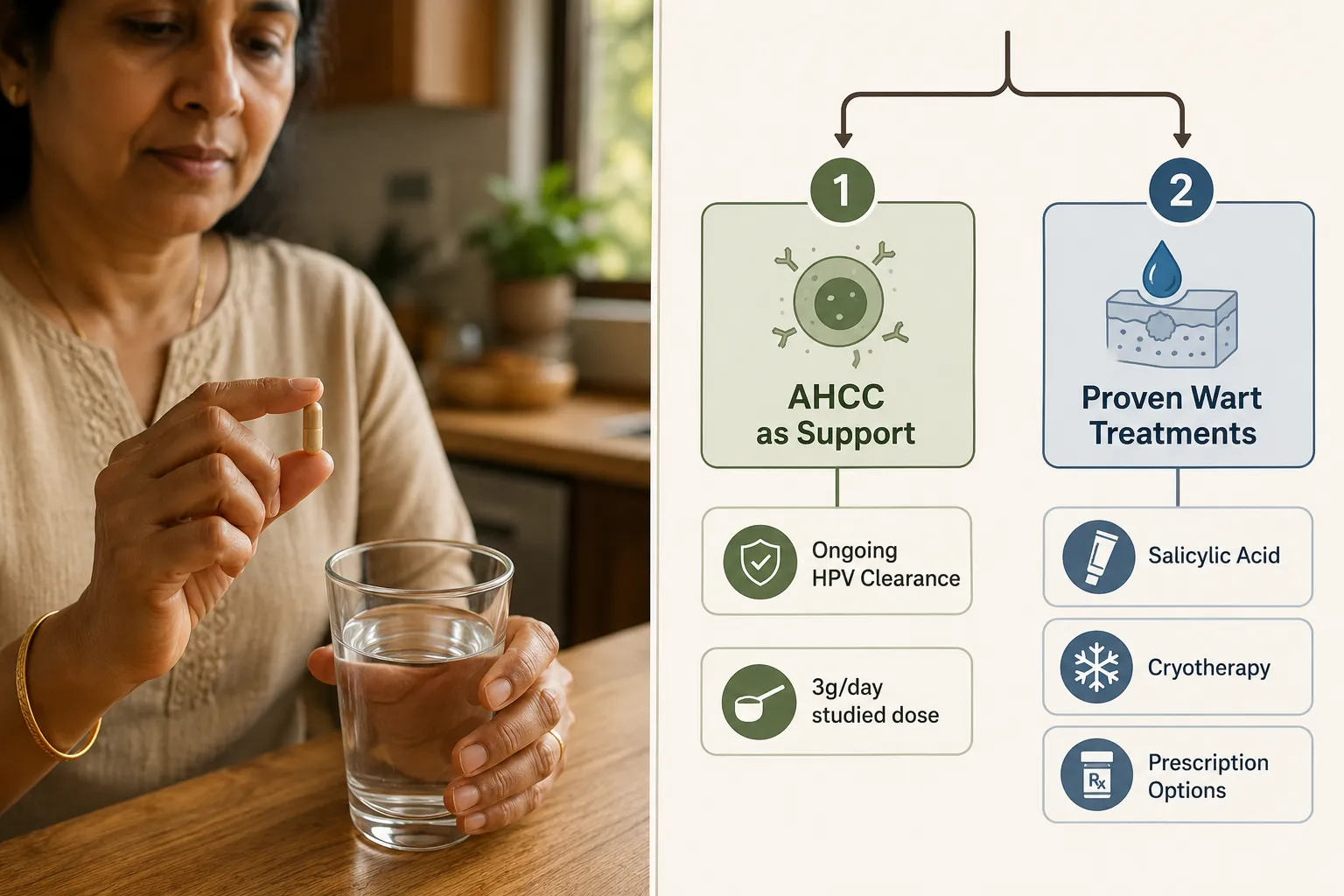
There is also a practical consideration: hand warts already have well-established, inexpensive treatments. Salicylic acid applied consistently over weeks to months clears the majority of common warts. Cryotherapy (liquid nitrogen applied by a clinician) is effective for warts that don’t respond to topical treatment. These approaches have decades of controlled trial data behind them.
Taking AHCC at 3 g/day, the dose used in HPV studies, appears generally safe based on oncology and HPV trial data. Side effects reported have been mild (primarily gastrointestinal). But “safe to take” and “evidence-based for this specific use” are different claims.
What Actually Works for Hand Warts
If you have warts on your hands and want to treat them, the evidence-based options are:
- Salicylic acid (over-the-counter): Applied daily after soaking and filing the wart, this keratolytic treatment clears roughly 75% of common warts over 12 weeks. Consistency matters more than concentration.
- Cryotherapy: A clinician applies liquid nitrogen to freeze the wart tissue. Multiple sessions are usually needed. Effective for stubborn or multiple warts.
- Prescription topical options: Imiquimod and other immune-response modifiers are used for warts that don’t respond to first-line treatment. These work by stimulating local immune activity, a mechanism that has some conceptual overlap with AHCC’s systemic approach, though the delivery and evidence base are very different.
For context on how topical treatments work in HPV-related conditions, Topical Medications for Genital Warts: Prescription Creams and How They Work explains the immune-response mechanism behind imiquimod and similar agents.
If you’re dealing with warts that keep returning or spreading, that’s worth discussing with a dermatologist, not because it signals something serious, but because persistent warts sometimes respond to combination approaches that a clinician can tailor.
Where AHCC Research Is Heading
As of 2026, the research trajectory for AHCC is focused on high-risk HPV and oncology applications. The ongoing trials will likely clarify whether AHCC has a reliable role in cervical HPV clearance and whether it adds anything when combined with HPV vaccination. Those results, when published, will be relevant to understanding AHCC’s immune effects more broadly.
Whether any researcher will design a trial specifically for cutaneous hand warts, a condition that is common but rarely serious, is less certain. The commercial and clinical urgency is lower than for cervical dysplasia or head and neck cancer.
If you’re interested in the broader evidence base for AHCC and immune health, AHCC Benefits, What to Know covers the current research landscape across different applications.
Frequently Asked Questions
Is AHCC safe to take if I have hand warts?
Based on HPV and oncology trial data, AHCC at 3 g/day appears well tolerated, with mild gastrointestinal side effects reported in some participants. That said, “safe” doesn’t mean “indicated.” There’s no clinical evidence supporting its use specifically for hand warts, so it’s worth discussing with your doctor before adding it, particularly if you take other medications or have an underlying health condition.
Will hand warts go away without any treatment?
Most do. Studies suggest roughly 65-70% of common warts resolve spontaneously within two years as the immune system develops recognition of the specific HPV type. Children tend to clear them faster than adults. If yours are spreading, painful, or have persisted beyond two years, treatment is a reasonable next step.
Does the HPV vaccine protect against hand warts?
No. Current HPV vaccines (Gardasil 9 and others) target high-risk types (16, 18, 31, 33, 45, 52, 58) and the genital wart types (6 and 11). They do not cover HPV 2 or HPV 4, which cause the common hand warts most people encounter. Vaccination is still valuable for its other protections, it just won’t affect cutaneous wart risk.
Are hand warts contagious?
Yes. HPV 2 and HPV 4 spread through direct skin contact and can also spread to other areas of your own skin, particularly through cuts or broken skin. Avoiding picking at warts and keeping them covered during activities with skin-to-skin contact reduces transmission risk.
Could boosting my immune system generally help clear warts faster?
There’s indirect evidence that immune function affects wart persistence, immunocompromised individuals have more treatment-resistant warts, and warts often resolve after immune recovery. General immune health (adequate sleep, managing chronic stress, treating underlying conditions) is reasonable to support, but no specific supplement has been shown in a controlled trial to speed clearance of common hand warts.
A Practical Path Forward
Hand warts are caused by low-risk HPV types that your immune system is generally capable of clearing on its own. AHCC has genuine and growing evidence for high-risk cervical HPV, the phase II trial data is real, and the ongoing multicenter studies will tell us more. But that evidence doesn’t extend to cutaneous warts on your hands, and it would be getting ahead of the data to treat it as if it does.
Start with what works: consistent salicylic acid application or a cryotherapy appointment with a dermatologist. If you’re immunocompromised or have warts that keep returning despite treatment, talk to your doctor about whether a systemic immune-support approach, including whether AHCC fits your specific situation, makes sense as an adjunct. That conversation belongs in a clinical context, not in a supplement aisle.