An abnormal Pap smear does not mean you have cervical cancer. Most abnormal results reflect minor cell changes that the immune system resolves on its own, and even the more significant findings are highly treatable when caught through screening. Understanding what an abnormal Pap smear means, and what happens next, removes a lot of the fear that comes with that phone call or letter from your doctor.
Key Takeaways
- Most abnormal Pap results fall into low-grade categories that are monitored, not immediately treated.
- HPV testing is now central to deciding what your next step should be, the two results are read together.
- The follow-up path depends on your specific result category: ASC-US, LSIL, HSIL, or AGC each have distinct protocols.
- Colposcopy is a common next step, but having one does not mean cancer has been found.
- Current management in 2026 is risk-based, meaning your age, HPV status, and history all shape what happens next.
What an Abnormal Pap Result Actually Means
“Abnormal” covers a wide range of findings, and where your result sits on that range matters enormously.
A Pap smear collects cells from your cervix and checks them for changes in shape or structure. Those changes are graded using specific categories. The most common findings are:
- ASC-US (Atypical Squamous Cells of Undetermined Significance): the mildest and most common abnormal result. Often linked to a temporary HPV infection.
- LSIL (Low-Grade Squamous Intraepithelial Lesion): mild cell changes, frequently associated with an active HPV infection that the body often clears.
- HSIL (High-Grade Squamous Intraepithelial Lesion): more significant changes that warrant prompt follow-up, as these have a higher chance of progressing if untreated.
- AGC (Atypical Glandular Cells): less common, but requires thorough evaluation because glandular cells line the inside of the cervical canal.
The category your result falls into directly determines what your doctor recommends next. An ASC-US result managed alongside a negative HPV test, for example, may simply mean a repeat screen in three years. An HSIL result moves faster.
For a broader look at how HPV connects to cervical cell changes, the guide on HPV in women: symptoms, screening, cervical risk, and what it means covers the full picture.
How HPV Testing Shapes What Happens Next After an Abnormal Pap Smear
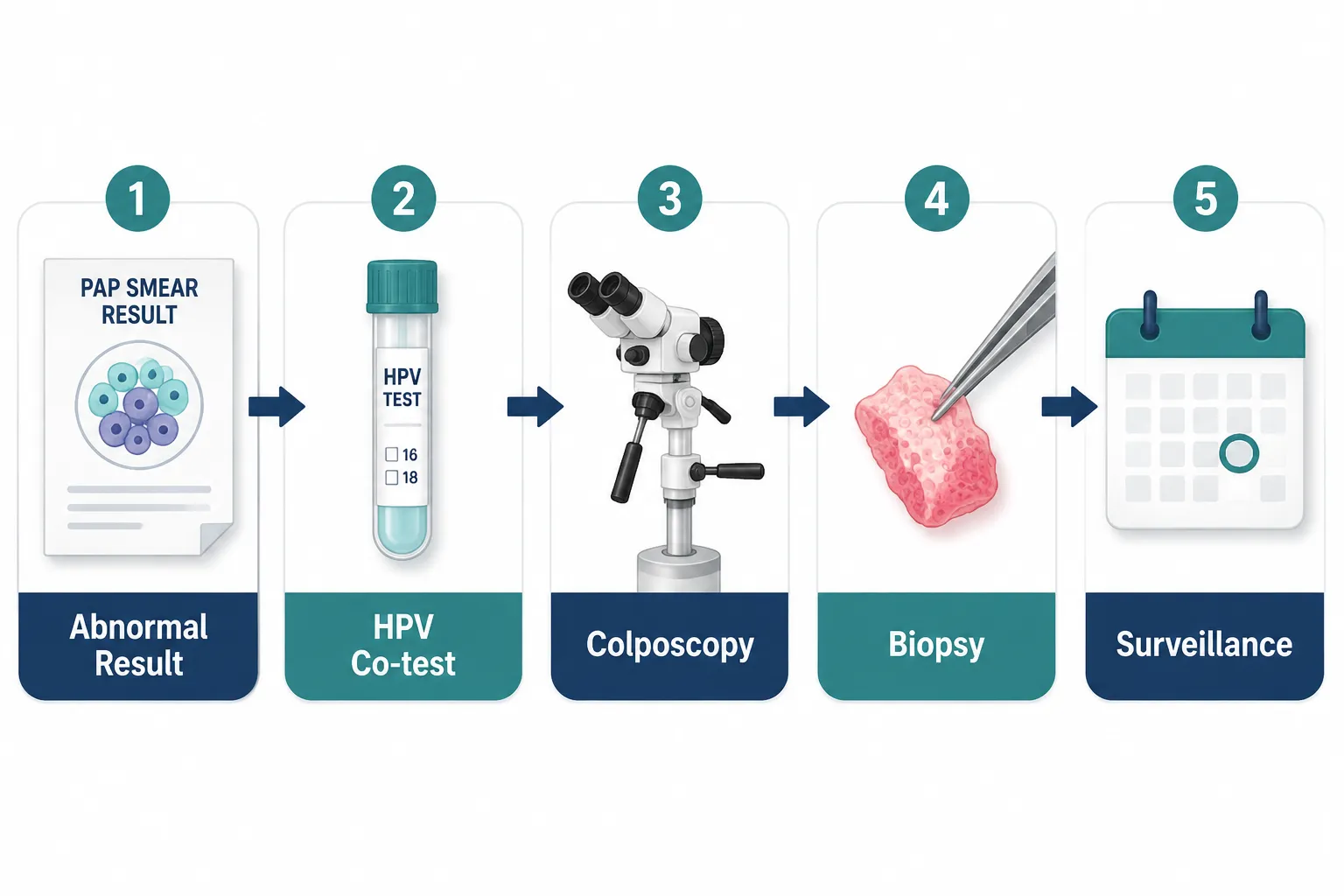
HPV is the underlying cause of virtually all cervical cell changes detected on a Pap smear. That is why HPV co-testing, running an HPV test alongside or after your Pap, is now the standard way to interpret abnormal results and decide on the next step.
If your Pap shows ASC-US and your HPV test is negative, the risk of significant disease is very low. Most guidelines support returning to routine screening intervals rather than immediate colposcopy. If the same ASC-US result comes back with a positive test for HPV 16 or HPV 18, the two high-risk types responsible for the majority of cervical cancers, colposcopy is recommended promptly.
This risk-based approach means two people with the same Pap result can have very different next steps, and both can be correct. Your HPV status, your age, and your screening history are all factored in.
The HPV testing guide, how it works, who should get it, and what results mean explains how co-testing results are interpreted in detail.
One development worth knowing about in 2026: self-collected HPV samples are increasingly available as an alternative to clinician-collected samples in some settings. A positive result from a self-collected sample is managed using the same risk-based protocols as a clinician-collected result.
Who Is at Higher Risk for Significant Findings After an Abnormal Pap?
Not every abnormal result carries the same risk of progressing. These groups face a higher likelihood of significant findings:
- People with a history of previous abnormal Pap results or prior HPV-related treatment, as the cervix may already have a pattern of recurrent cell changes.
- Immunocompromised individuals, including those living with HIV or on immunosuppressive therapy after organ transplant, because the immune system is less able to clear high-risk HPV infections on its own.
- Smokers, since smoking is associated with impaired local immune response in cervical tissue, making it harder to clear HPV.
- Unvaccinated people who have been exposed to HPV 16 or 18, as these types carry the highest risk of progression to HSIL and beyond.
Colposcopy: What It Is and What to Expect
Colposcopy is the procedure most commonly recommended after an abnormal Pap result that needs closer evaluation. It is not a treatment, it is a closer look.
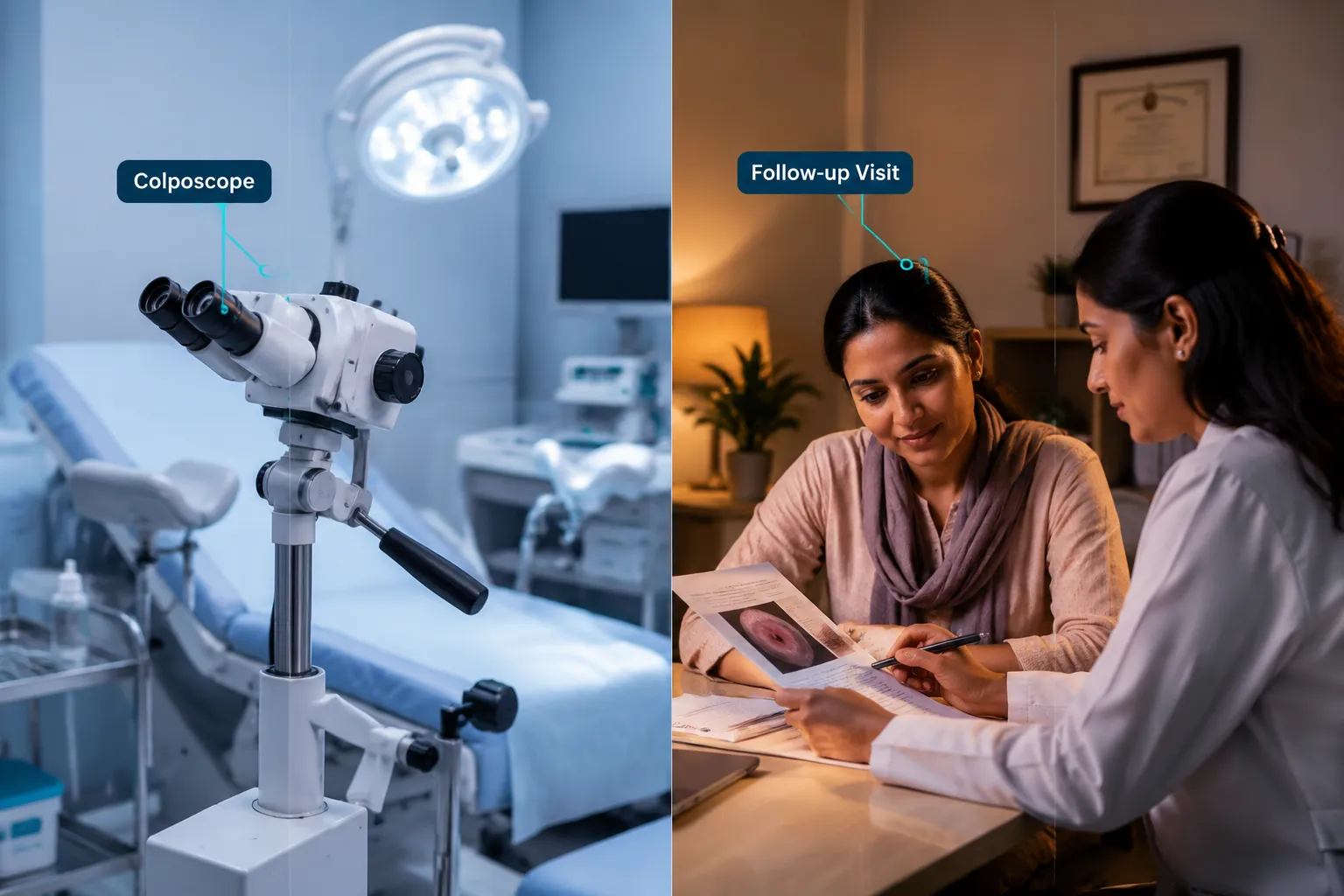
During a colposcopy, your doctor uses a colposcope (a lighted magnifying instrument positioned outside your body) to examine your cervix in detail. A mild vinegar-like solution is applied to the cervix to make abnormal cells more visible. The procedure takes about 15 to 20 minutes and is done in a clinic or office setting.
If your doctor sees an area that looks abnormal, a small tissue sample, a biopsy, is taken from that area. The biopsy is what confirms whether cell changes are low-grade, high-grade, or cancerous. Mild cramping and light spotting afterward are normal. Results typically come back within one to two weeks.
A colposcopy finding of CIN 1 (mild dysplasia) is usually monitored rather than treated immediately, because most CIN 1 resolves on its own. CIN 2 or CIN 3 (moderate to severe dysplasia) generally leads to treatment.
Treatment Options if Cell Changes Are Confirmed
If a biopsy confirms high-grade changes (CIN 2 or CIN 3), the goal is to remove or destroy the abnormal tissue before it has any chance to progress.
The most common procedures are:
- LEEP (Loop Electrosurgical Excision Procedure): a thin wire loop carrying an electrical current removes the abnormal tissue. It is done in-office under local anesthesia and takes about 10 minutes.
- Cryotherapy: freezing the abnormal cells. Used less often now for high-grade changes, but still used in some settings for smaller areas.
- Cone biopsy (conization): a cone-shaped section of cervical tissue is removed. Used when the abnormal area extends into the cervical canal or when more tissue is needed for diagnosis.
Treatment is highly effective. Cell changes are easiest to manage before they progress, that is the entire purpose of screening.
After treatment, you will need follow-up testing at defined intervals, typically a co-test (Pap plus HPV) at six months, then annually for several years, depending on what was found and treated. This surveillance period is not optional; it confirms the treatment worked and catches any recurrence early.
For context on how HPV connects to cervical and other cancers, the article on HPV and cancer, which cancers are linked, how it happens, and how it’s prevented covers the mechanism in plain terms.
When the Next Step Is Watchful Waiting
Not every abnormal result leads to a procedure. For low-grade findings, particularly LSIL or ASC-US with a negative HPV test, active surveillance is often the right approach.
This means repeat co-testing at a defined interval (commonly 12 months) to see whether the cell changes resolve, persist, or progress. Most low-grade changes do resolve. The immune system clears the underlying HPV infection, and the cells return to normal on their own.
Watchful waiting is not the same as ignoring the result. It means your doctor is monitoring you on a schedule that matches the actual risk level of what was found. Missing those follow-up appointments is the one thing that turns a manageable situation into a more complicated one.
If you want to understand what HPV types are involved in low-grade versus high-grade findings, the guide to HPV types, low-risk, high-risk, and what the numbers mean explains the distinction clearly.
Frequently Asked Questions
Does an abnormal Pap smear mean I have HPV?
Not necessarily, but HPV is the most common cause of abnormal cervical cells. An HPV co-test run alongside your Pap gives your doctor the information needed to interpret the result accurately. Some cell changes have other causes, which is why the full picture, including your HPV status, matters.
Can I get an abnormal Pap result even if I’ve been vaccinated against HPV?
Yes. The HPV vaccine protects against the most common high-risk types (including HPV 16 and 18) but does not cover every HPV type. Routine Pap and HPV screening continues to be recommended on the standard schedule regardless of vaccination status.
How long does it take for abnormal cells to become cancer?
Progression from high-grade cell changes (CIN 3) to cervical cancer typically takes years, often a decade or more. This is why regular screening is so effective: it identifies changes at a stage when they are straightforward to treat. There is no guaranteed timeline, and progression is not inevitable, but monitoring and treatment when indicated are what prevent it.
Will an abnormal Pap affect my ability to get pregnant?
A single abnormal Pap result with no treatment does not affect fertility. LEEP and cone biopsy, if needed, can in rare cases affect the cervix in ways that are relevant to pregnancy, this is something to discuss with your doctor before treatment if you are planning a pregnancy, so the approach can be tailored accordingly.
What is the difference between an abnormal Pap and a positive HPV test?
A Pap smear looks at the appearance of cervical cells. An HPV test looks for the presence of high-risk HPV DNA. You can have a positive HPV test with a normal Pap, meaning HPV is present but has not yet caused visible cell changes. You can also have a mildly abnormal Pap with a negative HPV test. The two results are read together to determine your risk level and next step.
What to Do After an Abnormal Pap Smear
The most important action is to follow through on whatever your doctor recommends, whether that is an HPV co-test, a colposcopy, or a repeat Pap in 12 months. The follow-up interval is set based on your specific result and risk level, not as a precaution. Skipping or delaying it is the one variable that changes outcomes.
If you have not already had an HPV co-test alongside your Pap, ask your doctor whether one is indicated. If you are unsure what your result category means or why a specific follow-up was recommended, ask for clarification, understanding the reasoning makes it easier to stay on schedule.
The full guide to what to expect after an abnormal Pap smear covers the appointment-by-appointment process in more detail if you want to know exactly what each visit involves.